Brain Inspired
Recent articles
This podcast, hosted by Paul Middlebrooks, features in-depth conversations with neuroscientists studying natural and artificial intelligence, philosophy, consciousness and other related areas.
How does a control theorist explain cognition?
Maxim Raginsky draws on control theory, engineering and philosophy to explore what makes biological brains intelligent, what artificial intelligence is missing, and what principles underlie biological autonomy.
How does a control theorist explain cognition?
Maxim Raginsky draws on control theory, engineering and philosophy to explore what makes biological brains intelligent, what artificial intelligence is missing, and what principles underlie biological autonomy.
What if Hegel were a neuroscientist?
Andrea Gambarotto shares what Hegel and enactivism have in common: an agency-first approach to understanding minds and brains.
What if Hegel were a neuroscientist?
Andrea Gambarotto shares what Hegel and enactivism have in common: an agency-first approach to understanding minds and brains.
When we sleep, our brain is filled with spontaneous neural activity. What is it doing?
Daniel Levenstein explains how internally generated brain activity during sleep shapes our cognition, and why NeuroAI is such a powerful approach to understanding the brain.
When we sleep, our brain is filled with spontaneous neural activity. What is it doing?
Daniel Levenstein explains how internally generated brain activity during sleep shapes our cognition, and why NeuroAI is such a powerful approach to understanding the brain.
Marco Facchin explores the ever-shifting landscape of neuroscience theory and philosophy
Computational explanations of cognition, though powerful, aren't the only game in town.
Marco Facchin explores the ever-shifting landscape of neuroscience theory and philosophy
Computational explanations of cognition, though powerful, aren't the only game in town.
Alison Barth discovers how different neuron types contribute to cortical function
Barth uses learning tasks in mice as a tool to drive synaptic plasticity in the sensory cortex, hoping to unlock more general principles of how the cortex works.
Alison Barth discovers how different neuron types contribute to cortical function
Barth uses learning tasks in mice as a tool to drive synaptic plasticity in the sensory cortex, hoping to unlock more general principles of how the cortex works.
Is our intelligence rooted in how living organisms are organized?
Kathryn Nave explains how a concept called constraint closure may be fundamental to understanding brains, minds and cognition.
Is our intelligence rooted in how living organisms are organized?
Kathryn Nave explains how a concept called constraint closure may be fundamental to understanding brains, minds and cognition.
Johannes Jaeger explains why we should care that brains and AI are not the same
From single cells to whole organisms, living beings must continuously regenerate themselves and judge what's important to continue living. Artificial intelligence does not and cannot.
Johannes Jaeger explains why we should care that brains and AI are not the same
From single cells to whole organisms, living beings must continuously regenerate themselves and judge what's important to continue living. Artificial intelligence does not and cannot.
Are computational complexity principles relevant for explaining brain activity?
Cristopher Moore discusses the nature of computation and whether we should think of neural activity as computing.
Are computational complexity principles relevant for explaining brain activity?
Cristopher Moore discusses the nature of computation and whether we should think of neural activity as computing.
What counts as a ‘naturalistic’ behavior?
Nedah Nemati explains how neuroscience methods and the lived experience of the scientists themselves shape how we define the behaviors we seek to explain.
What counts as a ‘naturalistic’ behavior?
Nedah Nemati explains how neuroscience methods and the lived experience of the scientists themselves shape how we define the behaviors we seek to explain.
Ehud Ahissar offers a new kind of dualism for neuroscience
He explains how “perceptual dualism” can account for the way we communicate via digital symbols and perceive the world via analog brain processes.
Ehud Ahissar offers a new kind of dualism for neuroscience
He explains how “perceptual dualism” can account for the way we communicate via digital symbols and perceive the world via analog brain processes.
Explore more from The Transmitter
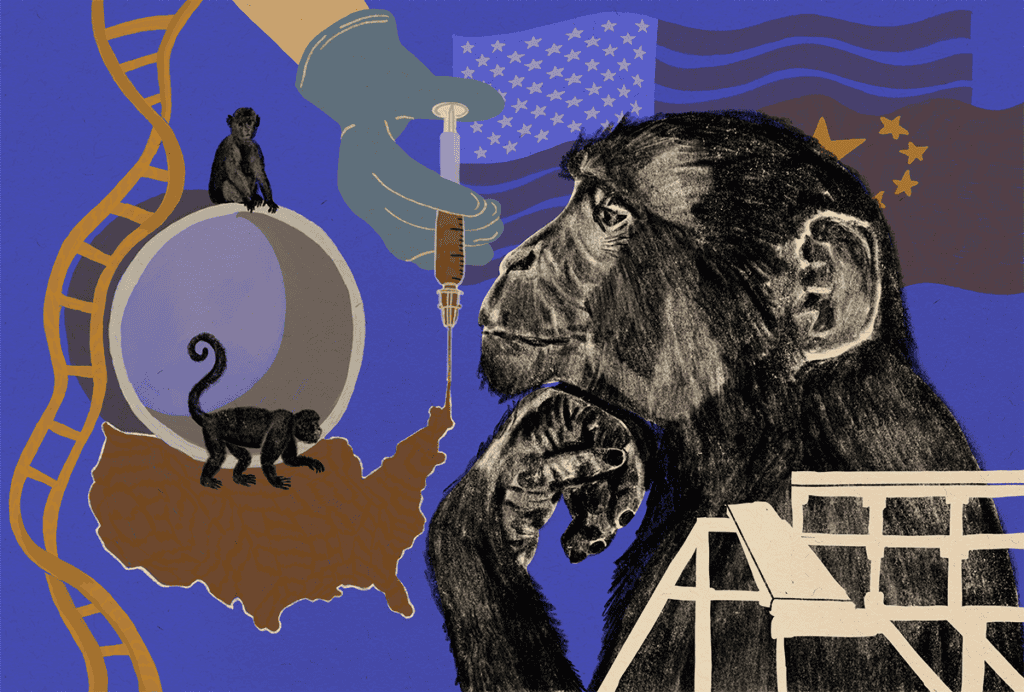
U.S. national primate research centers face an uncertain future
The facilities were meant to last 100 years. Four decades shy of that mark, amid flatlined funds and mounting political pressure, their directors are trying to find a path forward.
U.S. national primate research centers face an uncertain future
The facilities were meant to last 100 years. Four decades shy of that mark, amid flatlined funds and mounting political pressure, their directors are trying to find a path forward.
What if nonhuman primate research goes away?
As the U.S. government takes steps to stop using nonhuman primates in research, The Transmitter investigates what that shift could mean for neuroscience.
What if nonhuman primate research goes away?
As the U.S. government takes steps to stop using nonhuman primates in research, The Transmitter investigates what that shift could mean for neuroscience.
The neuroscience questions that need nonhuman primates
The Transmitter asked 17 neuroscientists what questions might remain unanswered if support for nonhuman primate research continues to decline.
The neuroscience questions that need nonhuman primates
The Transmitter asked 17 neuroscientists what questions might remain unanswered if support for nonhuman primate research continues to decline.