Learning to grasp a tennis ball versus a strawberry involves similar movements, just with different hand shapes and grip strengths. But rather than creating a completely different pattern of neuronal activity to represent each new object, the motor cortex uses similar representations with the same underlying structure. So how can the brain tell these actions apart?
Granule cells in the cerebellum do this distinguishing, shifting neuronal activities along with subtle differences between tasks, according to a new study in mice. The cerebellum preserves the basic representation of an activity while changing its orientation, which allows the brain to generalize to new situations and distinguish between contexts simultaneously.
It’s “a compelling new perspective” on how the cerebellum facilitates learning, says Eiman Azim, associate professor of molecular neurobiology at the Salk Institute for Biological Studies, who was not involved in the study. The work “makes important progress” in reconciling two necessary—and potentially conflicting—learning processes: generalization and contextualization, Azim says.
Researchers represent cortical activity patterns as trajectories through a low-dimensional space, known as a neural manifold. Cerebellar granule cells, which outnumber all other neurons in the brain combined, were previously thought to expand simple cortical manifolds into higher-dimensional representations, according to one long-standing theory. But high-dimensional expansion destroys the simplicity of the original representation, making it harder to generalize across tasks.
“We have these orthogonal ways of thinking about brain function, [in terms of] low-dimensional manifolds and high-dimensional expansion,” says study investigator Mark Wagner, Stadtman Investigator at the U.S. National Institutes of Health. The new findings suggest how those representations might synergize, he says.
By rotating simple manifolds instead of expanding them, granule cells may allow the brain to simultaneously generalize across tasks—avoiding the need to learn each new challenge from scratch—and capture what makes each situation distinct.
I
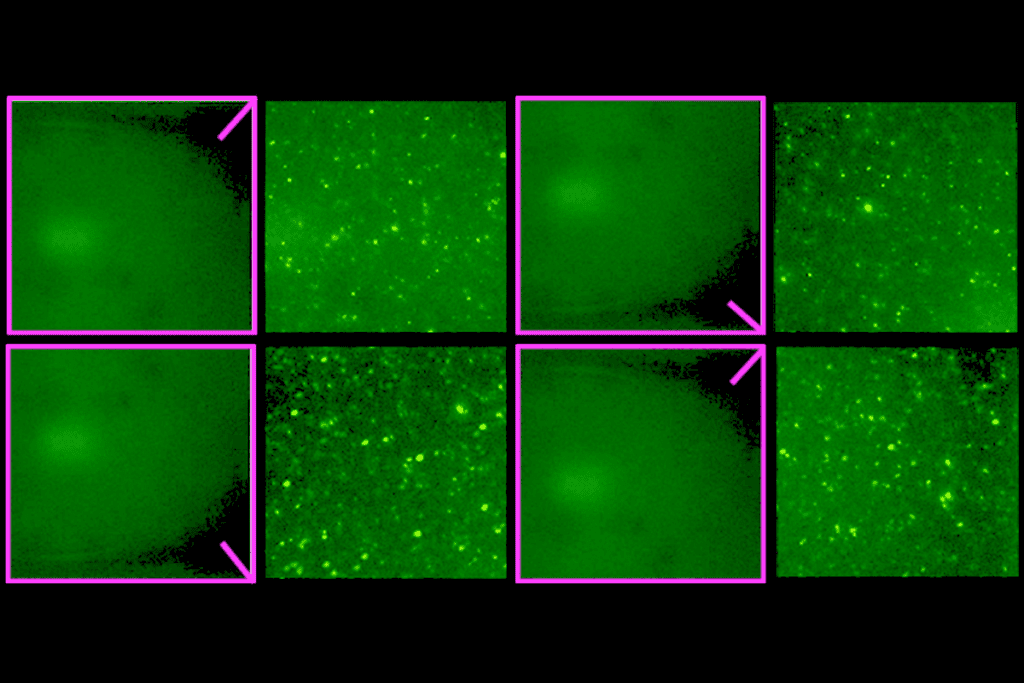
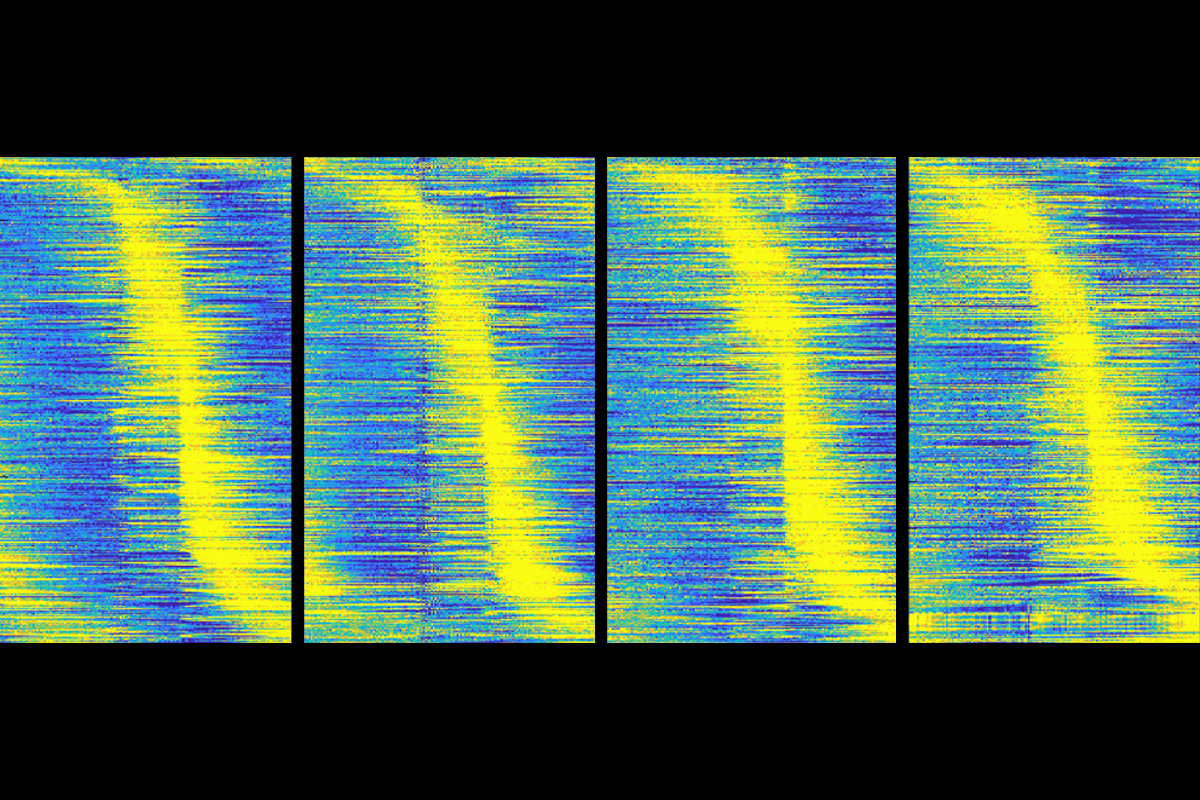
n the new study, mice performed two separate tasks that shared the same basic outcome: a water reward after a one-second delay. In both tasks, mice learned to lick prematurely in anticipation of the reward. The corresponding population activity of premotor cortex neurons and granule cells remained low dimensional in both cases, Wagner and his colleagues found via two-photon microscopy.Cortical neuron activity was relatively similar between the two tasks. Cerebellar granule cells, however, changed their activity between different contexts. As a population, the activity trajectories of the granule cells retained their overall shape but reoriented from one task to the next, the researchers found.
That reorientation becomes more pronounced with learning, they also found. As animals learned to anticipate the water reward, the population trajectories in the granule cell layer became increasingly distinct, with the best performers showing the greatest degree of reorientation.
The findings were published last month in Nature.
The work is a good example of what happens when “difficult experimental data doesn’t quite match up with what existing models would naively predict,” says Matthew Perich, assistant professor of neuroscience at the University of Montreal, who was not involved in the study. It’s possible, however, that neural representations that appear to be low dimensional could turn out to have more dimensions, depending on how they are measured, he says. If the analytical tools aren’t sensitive enough, there could be more complexity that we are missing, he says.
It is also unclear “whether the same kinds of rules apply to signals arriving from the spinal cord and other brainstem sources,” Azim says. “These signals may have very different structure than the ones studied here, and it will be interesting to see whether this idea of granule cell reorientation applies more generally to other types of motor and sensory-related information.”
Perhaps the biggest unresolved issue is whether the population trajectories are reoriented by the granule cells themselves or by another cell type upstream, says David DiGregorio, professor of physiology and biophysics at the University of Colorado Anschutz, who was not involved in the work. The study didn’t measure the representation of mossy fibers—one of the major inputs to the cerebellum—which could contribute to this contextualization, he says. “The interesting question then becomes whether the granule cell layer amplifies or reorganizes that preexisting separation while keeping the representations relatively low dimensional.”
Wagner and his team plan to pinpoint exactly where population trajectories are reoriented, he says. They are also interested in how cerebellar circuits contribute to memory and other higher cognitive functions, which have largely gone underappreciated, he says.