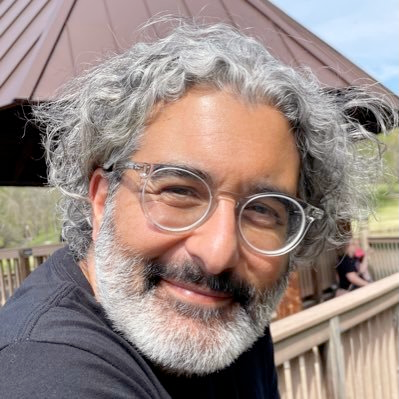
Armin Raznahan is a child and adolescent psychiatrist and chief of the Section on Developmental Neurogenomics (SDN) at the U.S. National Institute of Mental Health (NIMH). His research combines neuroimaging, genomic and bioinformatic techniques to better understand the architecture of human brain development in health, and in neurogenetic disorders that increase risk for psychiatric symptoms.
Raznahan completed his undergraduate and graduate training in London, studying medicine and pediatrics at King’s College London and King’s College Hospital, and psychiatry at the Maudsley Hospital, and then trained as a postdoctoral fellow with Jay Giedd and Judith Rapoport at the NIMH Intramural Research Program. He joined the National Institutes of Health’s Lasker Clinical Research Scholars Program in 2015 and became a tenured senior investigator at the NIMH Intramural Research Program in 2020.
He is a member of the U.K. Royal College of Paediatrics and Child Health and the Royal College of Psychiatrists, and a fellow of the American College of Neuropsychopharmacology (ACNP). He was elected to the American Society for Clinical Investigation in 2024. He is president-elect of the Organization for the Study of Sex Differences. He has also sat on the ACNP Diversity and Inclusion Task Force, the ACNP Membership Committee, the AXYS (Association for X- and Y-Chromosome Variations) Advisory Committee, the Organization for the Study of Sex Differences Council, and the French Autism and Neuro-Developmental Disorders Scientific Advisory Board, as well as editorial boards for the Journal of the American Academy of Child and Adolescent Psychiatry and NeuroImage.
The Section on Developmental Neurogenomics has been recognized by awards from the NIMH director (Outstanding Mentorship and Scientific Contributions), the ACNP (Eva King Killam Award for Translational Research) and the American Psychopathological Association (Robins/Guze Award).