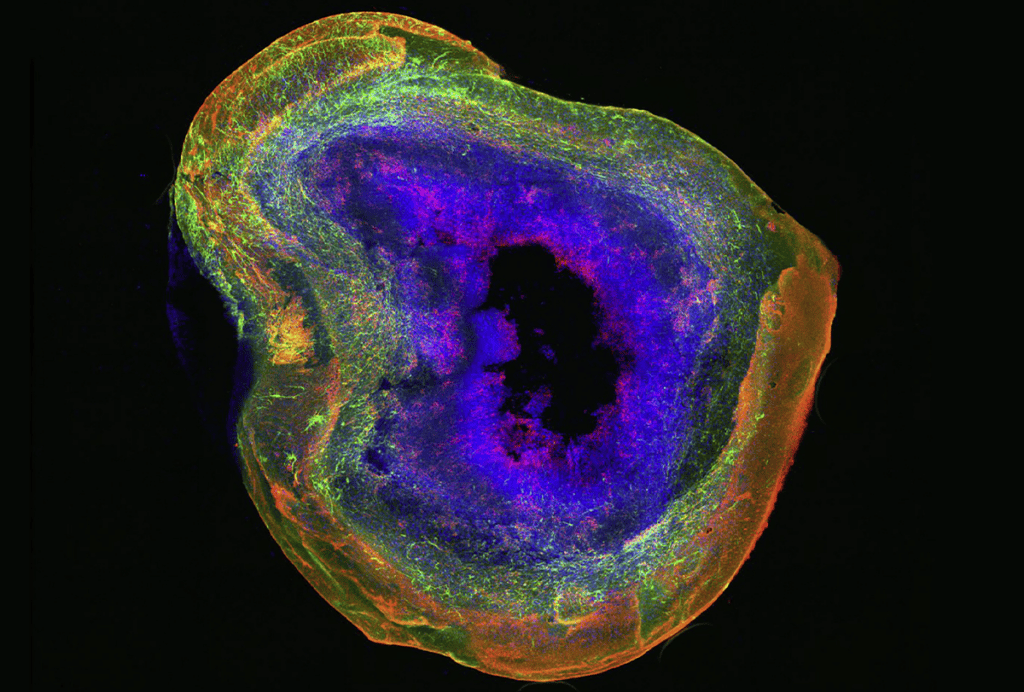
Group effect: Two new studies report on approaches to tackle a long-standing problem in autism research: There are many autism candidate genes—often de-novo variants—but any particular gene is rare in a population of autistic people. The first preprint crunched data from past studies to create an atlas of organoid models and, with predictive modeling, explored how gene perturbations may affect developmental pathways. The technique may help prioritize those autism-linked gene candidates with functional, disease-relevant outcomes, the investigators wrote. The second preprint used data from gene-association studies to cluster autism-linked genes that contribute to other conditions, such as schizophrenia and epilepsy.
Autism research spotted this week:
- “A high-resolution human pangenome structural variant resource for improved disease association” medRxiv