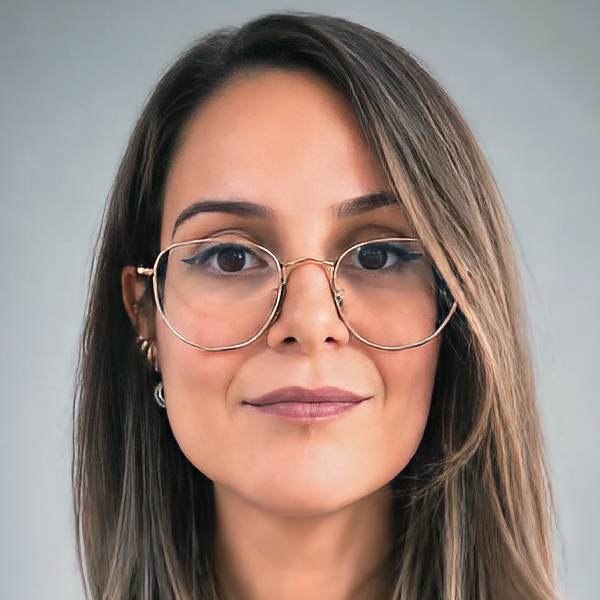
Vanessa Hadid.

Vanessa Hadid

Postdoctoral researcher
McGill University Health Centre and the Department of Psychology, University of Montreal

Vanessa Hadid is a postdoctoral researcher jointly affiliated with the McGill University Health Centre and the Department of Psychology at the University of Montreal, where she also holds appointments as a research coordinator and lecturer. Her research lies at the intersection of cognitive psychology and computational neuroscience, with a focus on sensory adaptation, multisensory integration and unconscious processing. Combining neuroimaging, behavioral modeling and interpretable machine learning, she studies how brain dynamics relate to perception, cognition and behavior across neurotypical and clinical populations, including cochlear implant users. Her current work explores interindividual variability in adaptive brain processes and the development of training strategies informed by neuroplasticity and multimodal brain data.

After earning her B.Sc. and M.Sc. in biomedical sciences, Hadid completed her Ph.D. in experimental medicine at the University of Montreal.
Explore more from The Transmitter

How energy determines where proteins are produced in neurons

Tatjana Tchumatchenko explains how mathematical modeling elucidates whether ion-channel proteins are produced locally in the soma or in the dendrites.

By Gaute Einevoll
26 August 2026 | 104 min listen
A brown mouse between a red cube and blue cylinder looks curiously at the top of the cylinder, standing on hind legs.

Wouldn’t you like to know? A mouse would

Mice seek information for curiosity’s sake—and their desire for knowledge versus a payout is represented distinctly in the brain, new findings suggest.

By Sarah Thau
26 August 2026 | 5 min read
Covers of The Transmitter's summer book picks.

Five new neuroscience books, and other notable titles from 2026

The Transmitter’s summer reading list includes an autopsy of the Human Brain Project, an overview of the neuroscience of motherhood and a memoir from a pioneer in Huntington’s disease research.

By Francisco J. Rivera Rosario
25 August 2026 | 7 min read