LISTEN TO THIS STORY:
0:00
/

Neuroscience in Chile, and across Latin America, does not lack talent or ideas, but the systems that make science visible—prestigious journals, conferences and networks—increasingly price its researchers out.
Leia este artigo em português.
Watching the World Cup from Chile was a strange experience. We were outside the tournament, but we know the game, follow it closely and understand something that every World Cup shows clearly: Talent is not the same as access.
This is also true in science. Talent and ideas are everywhere, but the journals, conferences and networks that make them visible are still concentrated in a small number of wealthy countries. Research visibility has its own infrastructure. It depends on publication fees, travel budgets and access to professional networks that are not evenly distributed.
The question in Latin America is not whether we have good laboratories or internationally relevant ideas. We do. The question is why making them visible is so expensive.
Chile offers a useful case study for seeing this problem clearly. It is often described as one of Latin America’s scientific bright spots. It is not among the poorest countries in the region, and it has strong universities and a vibrant neuroscience community.
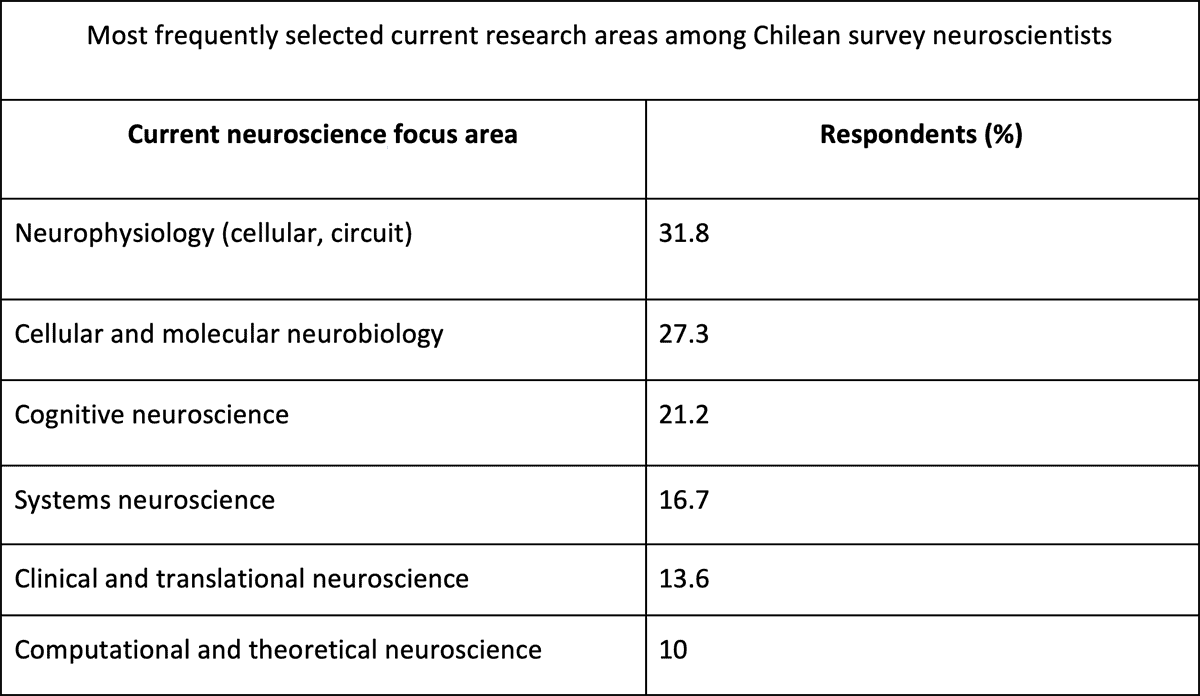
Earlier this year, my collaborators and I surveyed researchers and trainees in that community to understand how the field has developed. We found scientists working across neurophysiology, cellular and molecular neurobiology, cognitive neuroscience and systems neuroscience, spanning both basic and more integrative approaches. About two-thirds of respondents reported completing their Ph.D. in Chile, suggesting that the field’s expansion is not simply the result of training abroad.
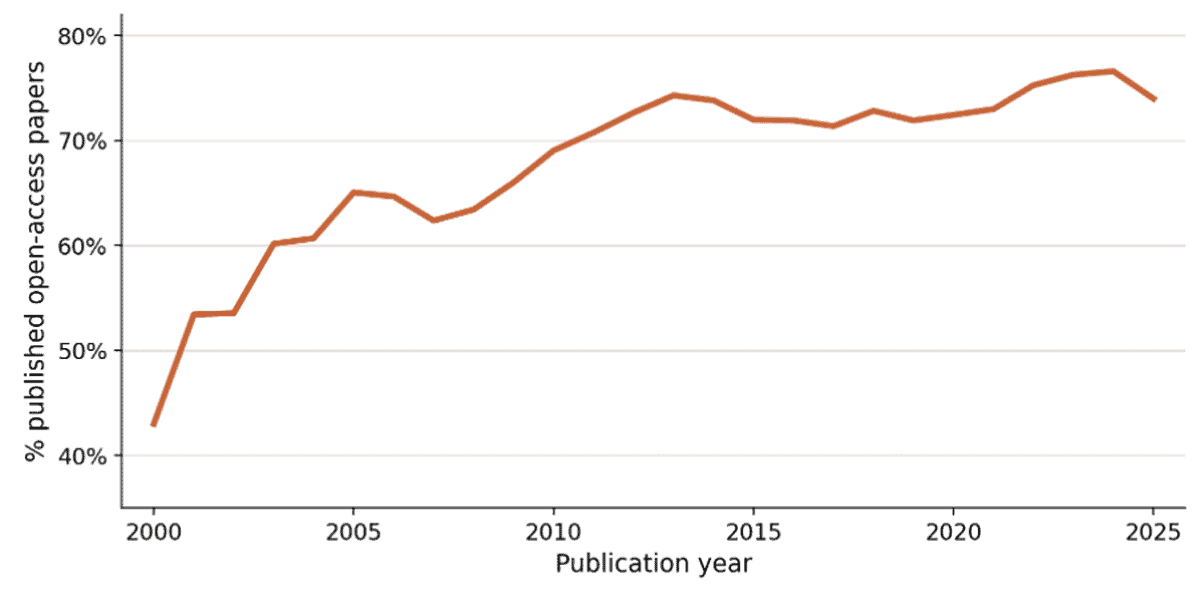
That research, we found, has also produced a large and visible body of work, present in international literature. According to OpenAlex, an open-access database that tracks research publications, 14,870 neuroscience-related publications with Chilean affiliations were published between 1941 and 2026. Approximately 11,000 of those publications were published after 2000.
This achievement deserves recognition, but it should not be used as evidence that the current system for identifying global talent is working. By bibliometric measures, Chilean neuroscience may look like a success story: Publication output, international collaborations, open-access publishing and visibility have all increased. Yet the budget for research in Chile tells a different story. These achievements have been produced by a community working under funding conditions that differ sharply from those of the international scientific community Chilean researchers are expected to participate in. Publication success can therefore hide both the precarity behind existing achievements and the talent that never receives sufficient support to participate. Calls for diversity and open science are not enough to support more Latin American participation if the conditions of participation remain so unequal.
A
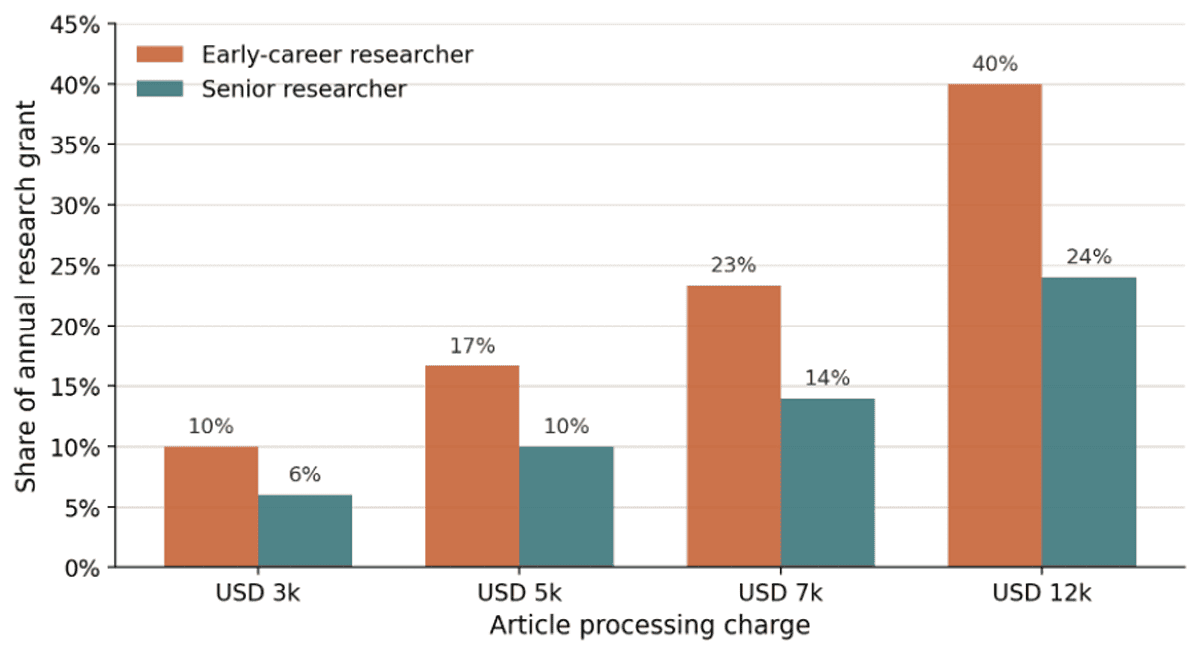
For an early-career neuroscientist, a typical annual research budget is roughly $30,000. Many high-impact open-access journals charge article processing fees (APCs) of more than $5,000, and some charge well above $7,000. One accepted paper can consume months of budget, never mind the expense of reagents, participant payments, students, equipment repairs or unexpected costs. For a well-funded laboratory in a high-income country, an APC may be an administrative expense. For a Chilean laboratory, it’s an existential decision: Publish where the work may receive attention, or preserve the budget needed to keep the work going.
The peer-review crisis adds another layer of challenge. Many busy researchers are less willing to review for lower-impact journals, opting to reserve their time to review for high-status journals, which creates a quiet prestige trap. More affordable journal options often struggle to secure timely and rigorous reviews. For researchers with limited budgets, choosing a cheaper route comes with less prestige, slower review and less visibility.
Conferences create the same problem. Registration is only one part of the cost. For someone traveling from Santiago, the full trip can include a long-haul flight, several hotel nights, meals and local transport in addition to those conference fees—adding up to an important part of a yearly research budget. Attending meetings in the United States, Europe, Asia or Australia can easily reach several thousand dollars. Regional meetings in South America, such as the Congress of the Federation of Latin American and Caribbean Neurosciences (FALAN), are usually cheaper because registration fees are lower and travel is shorter. Conference participation should not be a luxury add-on to science. It is how trainees meet future mentors, how collaborations begin and how work becomes visible.
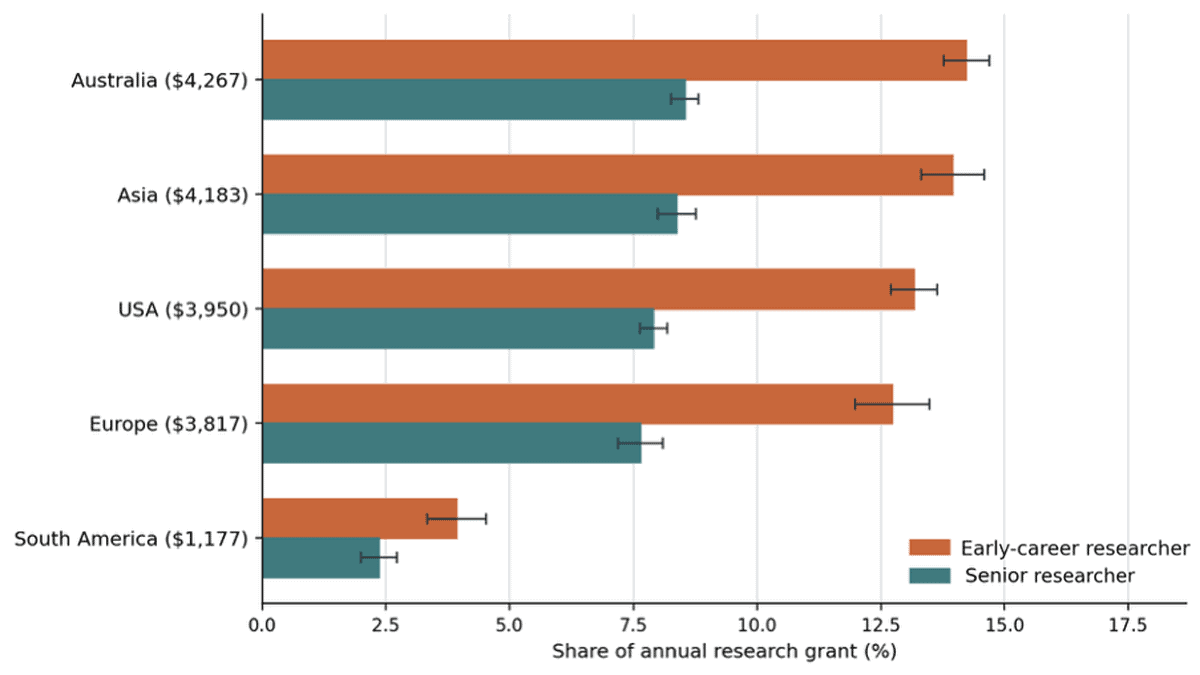
For these reasons, the usual language around increasing diversity feels incomplete to me. Many journals, societies and institutions in the Global North say they want more international authors, more Latin American collaborators and more voices outside the usual centers. I believe many of them mean it. But participation is not only a matter of being invited to a program. It also depends on whether researchers can pay the costs of being present. Invitations, panels and special issues do not change that arithmetic, and the waiver system only partially helps. Chile, for example, almost never qualifies for automatic waivers, even though its scientific budgets still do not resemble those of wealthy research systems. Many waiver policies are based on national income categories, not on grant size, local funding conditions or purchasing power.
I
I can diagnose the problem more confidently than I can prescribe its cure. But one thing seems clear: Goodwill will not move the needle without also changing who pays to be seen. A serious response would treat scientific visibility as a shared goal, not a commodity. Publishers that profit from publicly funded research should cross-subsidize publication for underfunded systems and for low- and middle-income countries, as well as countries with high levels of income inequality. Scientific societies should use conference revenue to fund participation from regions where attendance is structurally expensive. Funding agencies should stop rewarding publication venues whose costs their own grants cannot cover. Wealthy collaborators should budget for the visibility of their partners, not just for the data they help produce.
Right now, too much of global science works like a stadium with open doors but expensive tickets. Everyone is invited in principle, but only some can routinely afford to enter. Chilean neuroscience shows the tension clearly. Its researchers are publishing work that belongs in the international conversation, showing that important science can be conducted outside the traditional centers of power. Yet making those contributions often requires them and their institutions to compensate for limited funding, high publication costs and reduced access to resources that wealthier research systems take for granted. Their visibility should not be mistaken as evidence that the conditions required for participation are equal.
Chilean and Latin American neuroscience does not need applause from the sidelines. It needs a field in which quality can enter the pitch without first proving that it can afford the ticket. If global science is serious about quality, it also has to become serious about the price of prestige.