Add us as a Preferred Source on Google

Spotted around the web: Fuzzy diagnostic boundary, organoid oversight, women scientist setbacks

Here is a roundup of news and research for the week of 12 April.

By Jill Adams
16 April 2021 | 2 min read

This article is more than five years old.

Neuroscience—and science in general—is constantly evolving, so older articles may contain information or theories that have been reevaluated since their original publication date.

Research roundup

  • A calibrated version of the Autism Diagnostic Observation Schedule has good test-retest reliability, which substantiates its use in assessing autism traits over time. Journal of Autism and Developmental Disorders
  • Training Black parents of autistic children to advocate for themselves in clinical settings may help reduce racial disparities in healthcare services. Intellectual and Developmental Disabilities
  • The International Classification of Functioning, Disability and Health offers a holistic framework for viewing autism and attention deficit hyperactivity disorder as forms of neurodiversity. BioEssays
  • Autistic preschoolers have increased sensitivity and faster electroencephalogram responses to touch than their non-autistic peers. Molecular Autism
  • ‘Live birth bias’ may have skewed results suggesting that maternal exposure to traffic pollution lowers the likelihood of autism. Environmental Health Perspectives
  • Assessing preschoolers for autism at two points during development shows that those near the diagnostic boundary can cross it, in either direction. Journal of Child Psychology and Psychiatry
  • Genes that are over- or under-expressed when the 16p11.2 chromosomal region is duplicated or deleted appear to shape neuronal growth in the human brain. Cerebral Cortex
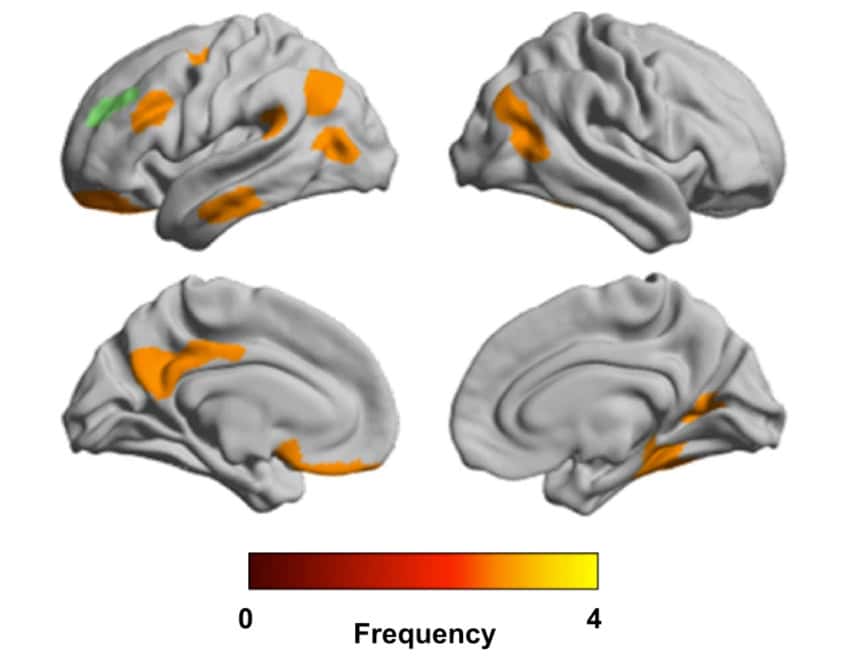
  • Neuronal connections between the brain’s cortex and the subcortex differ between autistic and non-autistic people. Nature Communications

    Brain images show structural differences in brain regions which track with autism traits.
    Atypical connections: Structural differences in some brain regions (orange) track with core autism traits.

Science and society

  • Contrary to the claim made by the podcast host of a top journal — that there is no racism in medicine — biased letters and studies continue to appear in many scientific journals. STAT
  • Autistic people have been sharing their behaviors and experiences on TikTok during April — Autism Acceptance Month — revealing the condition’s individuality and diversity. VeryWell Health
  • Many women scientists — especially mothers and women of color, who faced barriers to advancement before the coronavirus pandemic — say their climb is even harder now. The New York Times
  • A group of disability studies scholars have protested an academic publisher’s re-use of their work, sometimes involving abridgment, without their permission. The Chronicle of Higher Education
  • Current regulatory oversight is sufficient for research using brain organoids or relying on human cells grown in animals, according to a report by the U.S.-based National Academies. The Scientist


Sign up for the weekly Spectrum newsletter.

Stay current with the latest advancements in autism research.