FMRP
Recent articles
Autism research hits the road
Some scientists are thinking creatively about how to collect data in flexible environments and meet communities where they’re at.
Autism research hits the road
Some scientists are thinking creatively about how to collect data in flexible environments and meet communities where they’re at.
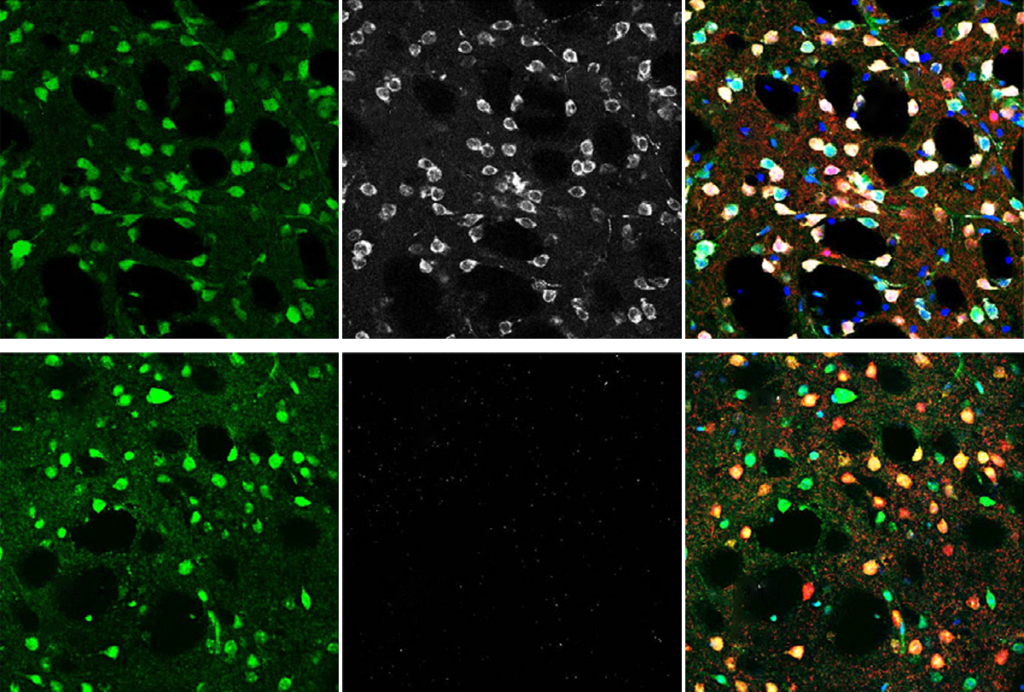
Skewed signaling in striatum may spawn repetitive behaviors
Synaptic changes in the brain region could drive a core trait of fragile X syndrome, a new mouse study suggests.
Skewed signaling in striatum may spawn repetitive behaviors
Synaptic changes in the brain region could drive a core trait of fragile X syndrome, a new mouse study suggests.
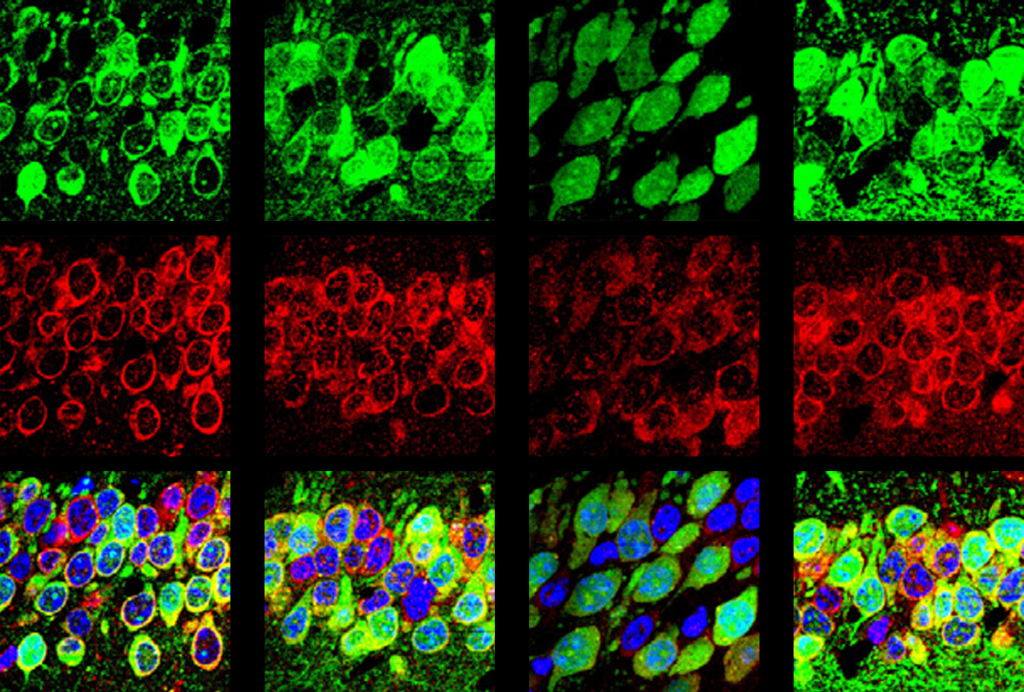
Neuronal deafness to stress may add to protein surplus in fragile X
A protective pathway that pauses protein synthesis is muted in a mouse model of fragile X syndrome, according to a new study.
Neuronal deafness to stress may add to protein surplus in fragile X
A protective pathway that pauses protein synthesis is muted in a mouse model of fragile X syndrome, according to a new study.
New gene-editing method flags fragile X mutation for repair
The approach prompts cultured cells to correct the genetic mutation in fragile X syndrome using their own DNA repair system, but it still needs to be tested further.
New gene-editing method flags fragile X mutation for repair
The approach prompts cultured cells to correct the genetic mutation in fragile X syndrome using their own DNA repair system, but it still needs to be tested further.
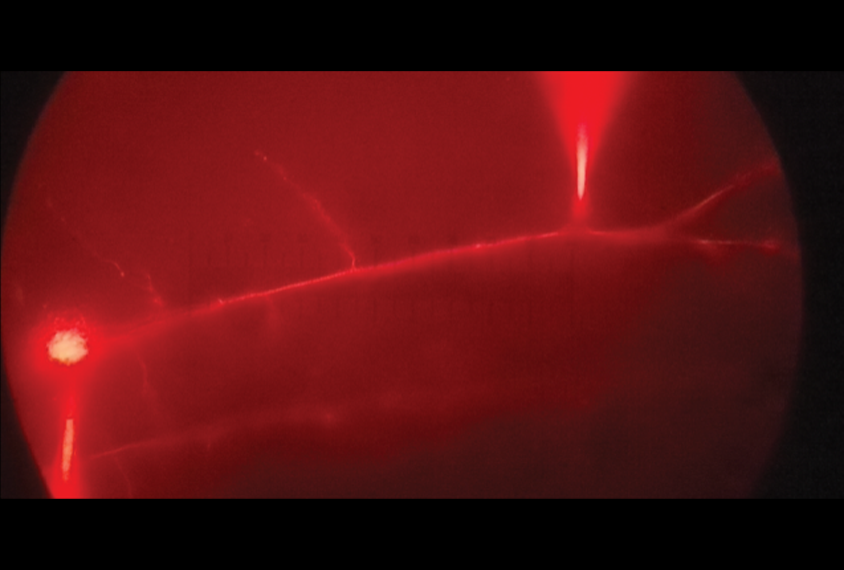
Neurons struggle to spike without fragile X gene
FMR1 loss impairs sodium channels, hindering mouse neurons from generating the electrical signals needed to transmit information.
Neurons struggle to spike without fragile X gene
FMR1 loss impairs sodium channels, hindering mouse neurons from generating the electrical signals needed to transmit information.
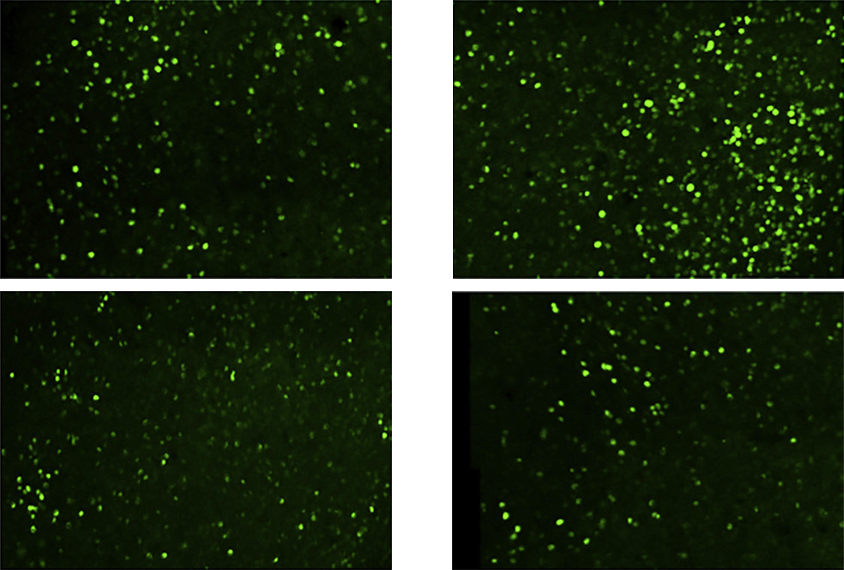
Missing mechanism helps solve fragile X protein mystery
Cells from people with fragile X syndrome overproduce — but don’t accumulate — proteins. New work suggests that excessive protein breakdown may account for this discrepancy, and explain some of the syndrome’s traits.
Missing mechanism helps solve fragile X protein mystery
Cells from people with fragile X syndrome overproduce — but don’t accumulate — proteins. New work suggests that excessive protein breakdown may account for this discrepancy, and explain some of the syndrome’s traits.
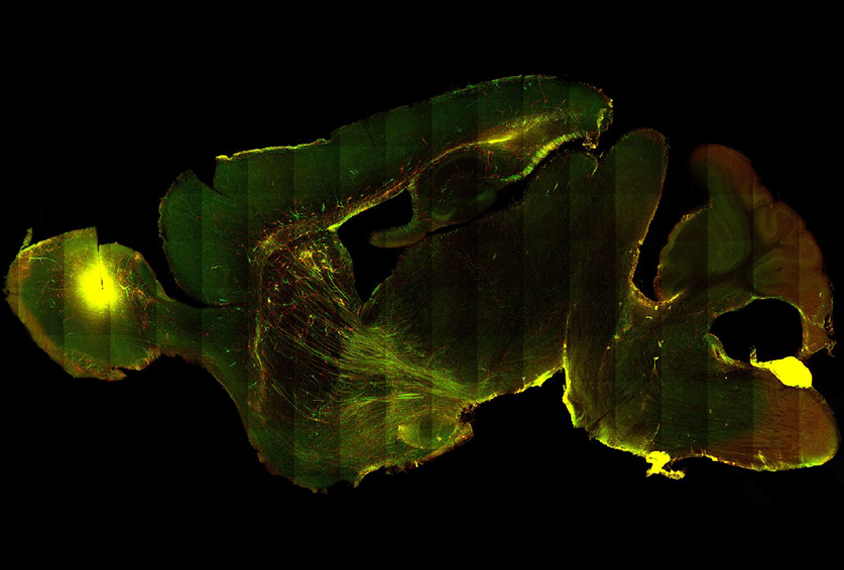
Fragile X neurons develop atypically in chimeric mice
After a brain transplant of reprogrammed human cells, the animals can for the first time recapitulate some neuronal changes seen in people with fragile X syndrome.
Fragile X neurons develop atypically in chimeric mice
After a brain transplant of reprogrammed human cells, the animals can for the first time recapitulate some neuronal changes seen in people with fragile X syndrome.
The cloudy connection between fragile X and cancer
People with the autism-linked syndrome lack a protein implicated in several cancers, but it’s unclear whether — or how — they are protected from malignancies.
The cloudy connection between fragile X and cancer
People with the autism-linked syndrome lack a protein implicated in several cancers, but it’s unclear whether — or how — they are protected from malignancies.
Largest-yet fragile X mutation in mice confirms model’s shortcomings
A 341-repeat mutation from a person with fragile X does not lead to the syndrome’s traits or function the same way in mice, highlighting a need for different animal models.
Largest-yet fragile X mutation in mice confirms model’s shortcomings
A 341-repeat mutation from a person with fragile X does not lead to the syndrome’s traits or function the same way in mice, highlighting a need for different animal models.
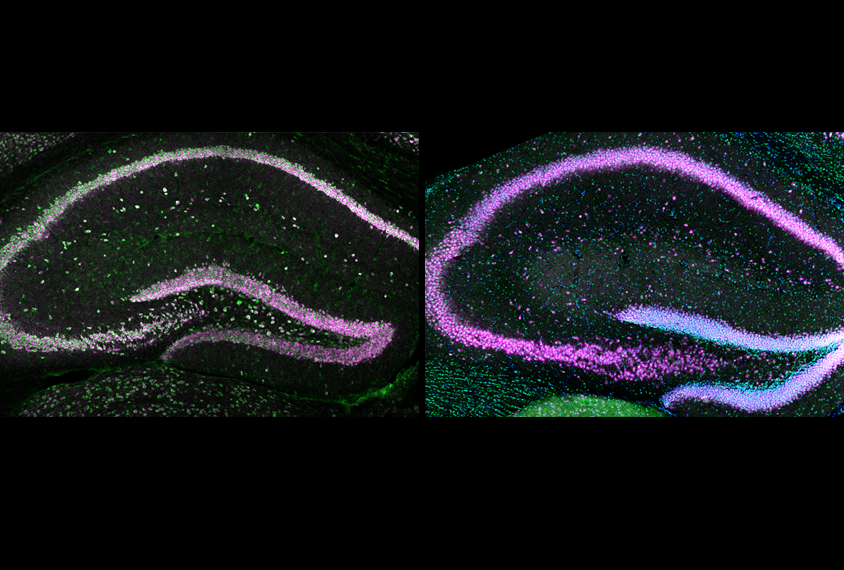
Plethora of protein-making machines in neurons may underlie fragile X
An overabundance of ribosomes drives an imbalance of proteins produced from long and short genetic transcripts in a mouse model of fragile X syndrome.
Plethora of protein-making machines in neurons may underlie fragile X
An overabundance of ribosomes drives an imbalance of proteins produced from long and short genetic transcripts in a mouse model of fragile X syndrome.
Explore more from The Transmitter
New projectome captures ‘complex beast’ of serotonin system in mice
The whole-brain map—the first of its kind in a vertebrate—identifies five distinct neuron groups.
New projectome captures ‘complex beast’ of serotonin system in mice
The whole-brain map—the first of its kind in a vertebrate—identifies five distinct neuron groups.
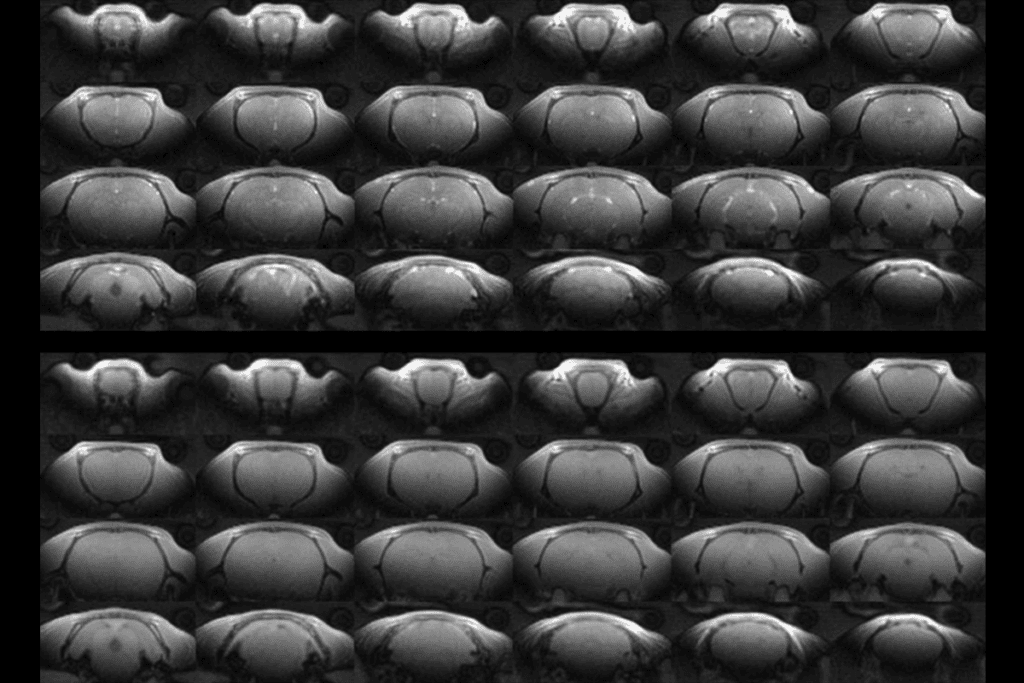
Silent, motion-resistant fMRI expands scans in behaving mice
The method, called SORDINO, captures brain images in animals while they move and interact.
Silent, motion-resistant fMRI expands scans in behaving mice
The method, called SORDINO, captures brain images in animals while they move and interact.

Autism-linked variants converge on two molecular patterns in mouse brains
Gene activity across 17 autism mouse models occurs in either of two opposing transcriptomic states, supporting the idea that diverse genetic changes may converge on a few recurring biological patterns.
Autism-linked variants converge on two molecular patterns in mouse brains
Gene activity across 17 autism mouse models occurs in either of two opposing transcriptomic states, supporting the idea that diverse genetic changes may converge on a few recurring biological patterns.