Coming of age: Some biomarkers of aging, such as DNA methylation in specific bodily systems, differ between autistic and non-autistic people, according to a new preprint. Overall, global epigenetic measures of aging were similar in the two groups, but differences in methylation emerged in the brain and blood systems. Among people with autism, elevated DNA methylation was more likely to be associated with psychosocial measures, such as loneliness and lower quality of life, than with clinical features such as trait severity or IQ. “These findings fit with a broader view of aging as a multidimensional process that does not occur uniformly across physiological systems,” the investigators write.
Autism research spotted this week:
- “Autism genes converge on three functional programs organized by neuronal subclass, developmental timing, and cortical patterning” bioRxiv
- “A rare recurring gain-of-function variant in BMPR2 causes neurodevelopmental phenotypes in humans and flies” American Journal of Human Genetics
- “Three dimensional reconstruction of the human nucleus accumbens reveals topographic organization and molecular heterogeneity of D1-islands across the anterior posterior axis” bioRxiv
- “Brain morphology network profiles in male and female youth with autism” Cerebral Cortex
- “Dysregulation of FMR1 splicing in human fragile X syndrome” bioRxiv
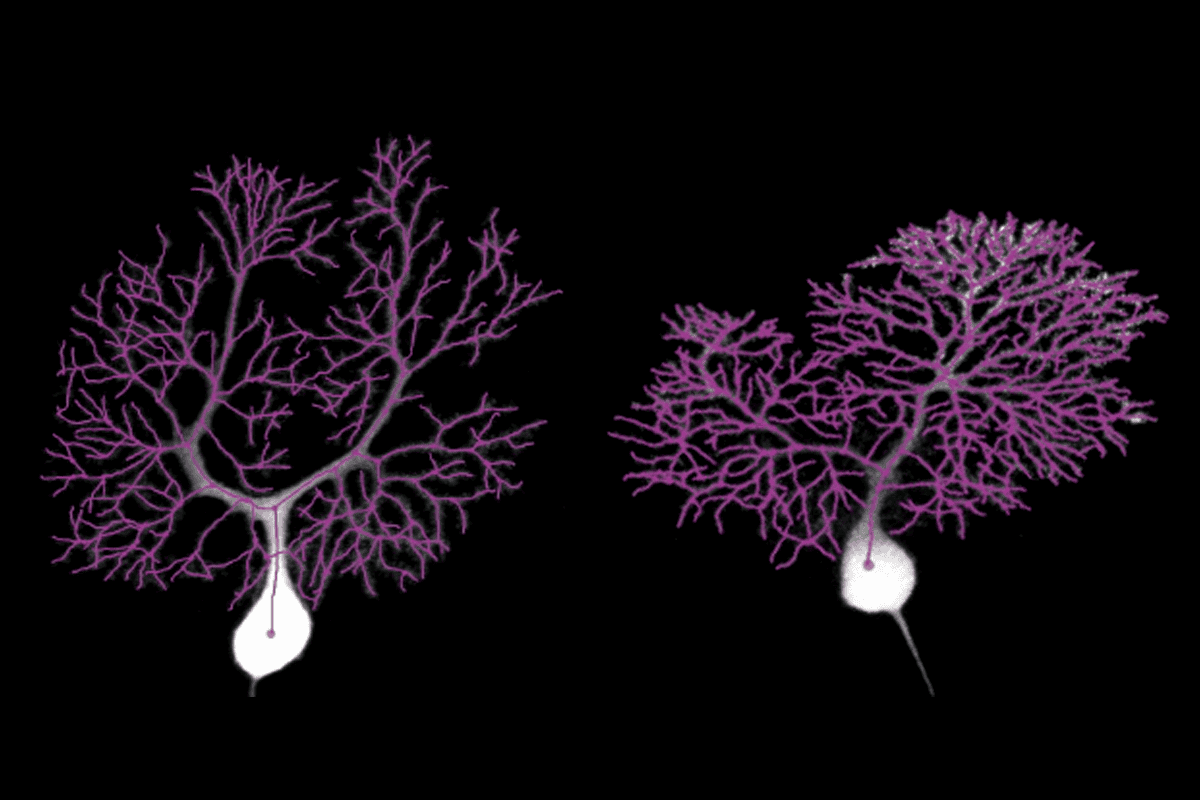
- “Precocious maturation and Purkinje cell dysfunction in the mouse CHD8 haploinsufficient cerebellum” bioRxiv