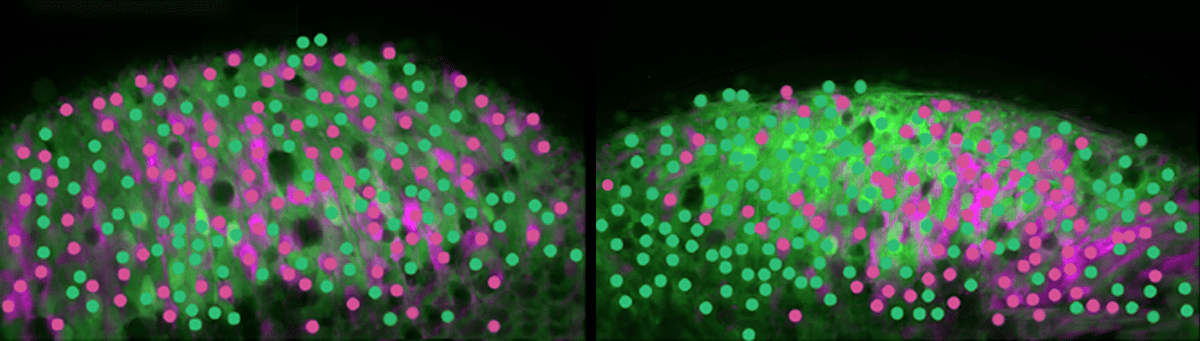
Two jobs: The hyperexcitability of neurons from people with fragile X syndrome is due to a loss of FMR1 transcripts, according to a new study. Investigators compared neurons that had loss of both FMR1 mRNA and its protein product, FMRP, with those missing only the protein and found that altered electrophysiological, metabolic and morphologic attributes all depended on the absence of the transcript. They also report that the FMR1 transcript acts as a riboregulator, inhibiting the activity of other mRNA molecules to regulate levels of a glycolytic enzyme.
Autism research spotted this week:
- “Postnatal development of sensory circuits supporting lifelong social behaviors” The Journal of Neuroscience
- “Sub-second dopamine reinforcement shapes juvenile social play” Cell
- “Learning-associated flexibility of cortical taste coding is impaired in SHANK3 knockout mice” eLife
- “NFIB and TCF4 converge to regulate the expression of genes involved in neuronal differentiation during neocortical development” bioRxiv
- “ARID1B haploinsufficiency weakens excitatory synaptic input to inhibitory interneurons beginning during early development” Neurobiology of Disease
- “Human cortical mosaicoids reveal impact on spatial organization and progressive loss of cross-genotype functional coupling in MECP2 mosaicism” bioRxiv