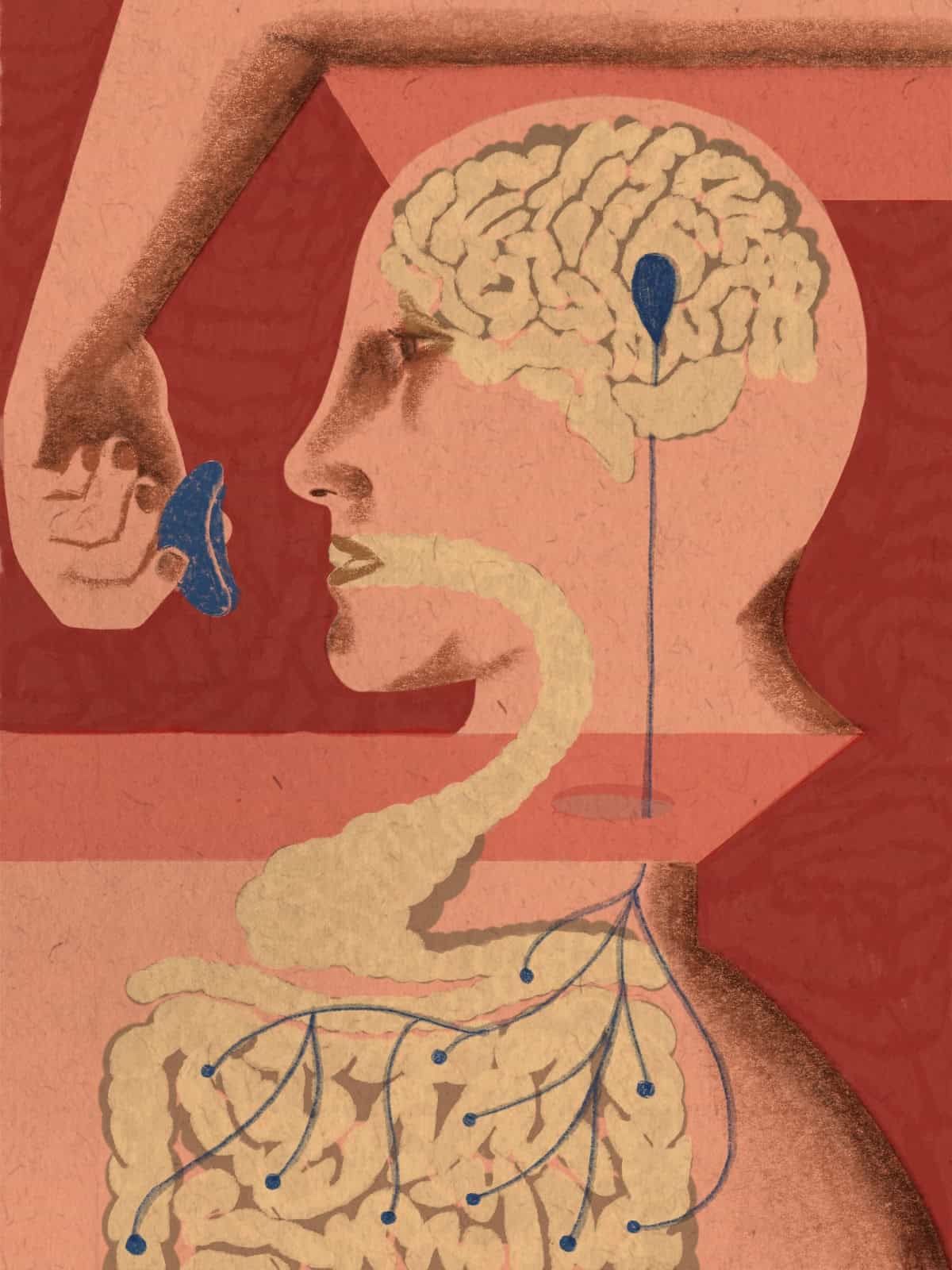
Animals—including people—learn to favor the flavor of nutrient-rich foods. But how does the brain associate a flavor with subsequent gut metabolism? A specialized dopamine pathway ties the two signals together, a new study shows.
Learning to associate specific flavors with nutritional outcomes “is a fundamental aspect of digestive behavior, but we really haven’t understood how it works in the brain,” says study investigator Zachary Knight, professor of physiology at the University of California, San Francisco.
Dopamine’s involvement in this process makes sense, Knight says, given its role in learning about sights and smells happening outside of the body. But the dopamine that tracks gut nutrients is selectively released in a region of the left basolateral amygdala (BLA)—not one of the canonical dopamine signaling areas such as the striatum and nucleus accumbens.
“The fact that the nucleus accumbens dopamine doesn’t really seem to be involved at all is very surprising,” says James McCutcheon, professor of behavioral and translational neuroscience at the Arctic University of Norway, who was not involved in the study.
This work “really reinforces, pun intended, that it’s kind of folly to think of dopamine as monolithic,” says Mitchell Roitman, professor of neuroscience at the University of Illinois Chicago, who was not involved in the work. The newly described pathway highlights the nuance within distinct dopamine neuron populations that project highly selectively, he says. The findings were published earlier this month in Nature.
W
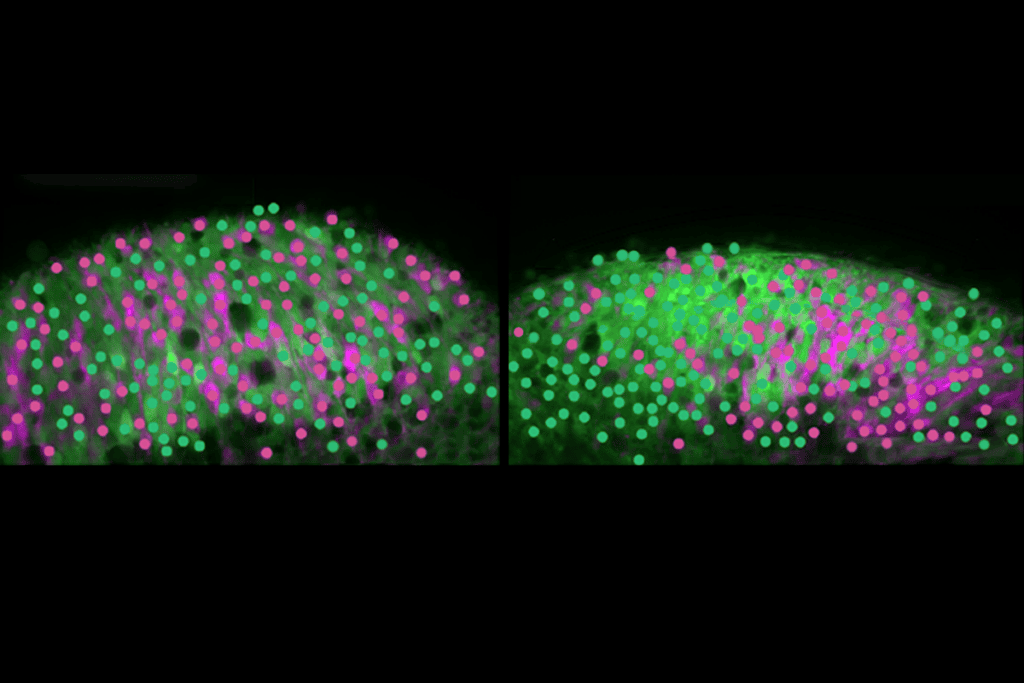
hen mice licked at a nutritional drink, dopamine release immediately spiked in the nucleus accumbens and then subsided seconds later, Knight and his colleagues found. Dopamine release then ramped up in the BLA in the minute after drinking and stayed elevated for up to 10 minutes.Only nutrients, not water or low-calorie sweetener, caused this second spike in dopamine in the BLA. And infusing glucose directly into the gut caused the same delayed dopamine spike in the BLA, indicating that this secondary release occurs once the gut sends signals back to the brain.
Mice also learned to prefer either a lemon-lime or grape flavored non-caloric solution when it was paired with an infusion of glucose directly into the gut. Silencing dopamine neurons in the ventral tegmental area (VTA), which are important for learning to correlate cues and rewards, prevented the mice from learning to link flavor with a sugar infusion. On the flip side, stimulating the VTA dopamine neuron terminals in the BLA while a mouse licked a non-caloric flavor was sufficient to induce a flavor preference.
The pathway from the VTA dopamine neuron signaling to dopamine release in the BLA is distinct from the known neuronal pathways for avoiding toxic foods. This newly described pathway seems to be specifically responsible for linking flavor with nutritional content, because blocking it does not interfere with other forms of post-ingestive learning and feeding behaviors.
It is still unclear whether this pathway responds to calories or specific nutrients, says McCutcheon, who envisions future experiments to test whether pure fat, proteins or sugars engage this dopamine pathway in the same way.
K
night says the project took an “unexpected turn” when he noticed something strange in the data. The dopamine release in the BLA happened only on the left side.“This is exactly what we see in humans,” says study investigator Dana Small, director of the Modern Diet and Physiology Research Center at Yale School of Medicine, who published a PET imaging study in 2019 that showed post-ingestive dopamine release is lateralized in humans.
Knight added a human angle to his study for confirmation and back-translating, says Marc Tittgemeyer, adjunct professor of neurology and neurosurgery at McGill University, who worked with Small to recapitulate the PET imaging study and perform a new functional nMRI experiment in people, which confirmed the same lateralization. “We would never have explored the full story without the human data, and certainly not without the animal data,” Tittgemeyer says.
This pathway, which is conserved across mice and humans, “underscores the need for ongoing evaluation of our theoretical frameworks to incorporate additional complexity” when it comes to dopamine signaling, says Benjamin Saunders, associate professor of neuroscience at the University of Minnesota, who was not involved in the study. Dopamine does many things, he says, and this work adds flavor-nutrient learning to its ever-evolving list of duties.