Add us as a Preferred Source on Google

Spotted around the web: Developing striatum, autism incidence in Japan, psychedelic therapies

Here is a roundup of news and research for the week of 10 May.

By Jill Adams
14 May 2021 | 3 min read

This article is more than five years old.

Neuroscience—and science in general—is constantly evolving, so older articles may contain information or theories that have been reevaluated since their original publication date.

Research roundup

  • JASPER, a naturalistic social-communication intervention for autistic children, seems to increase child-initiated interactions, a key step in language development. Journal of Child Psychology and Psychiatry
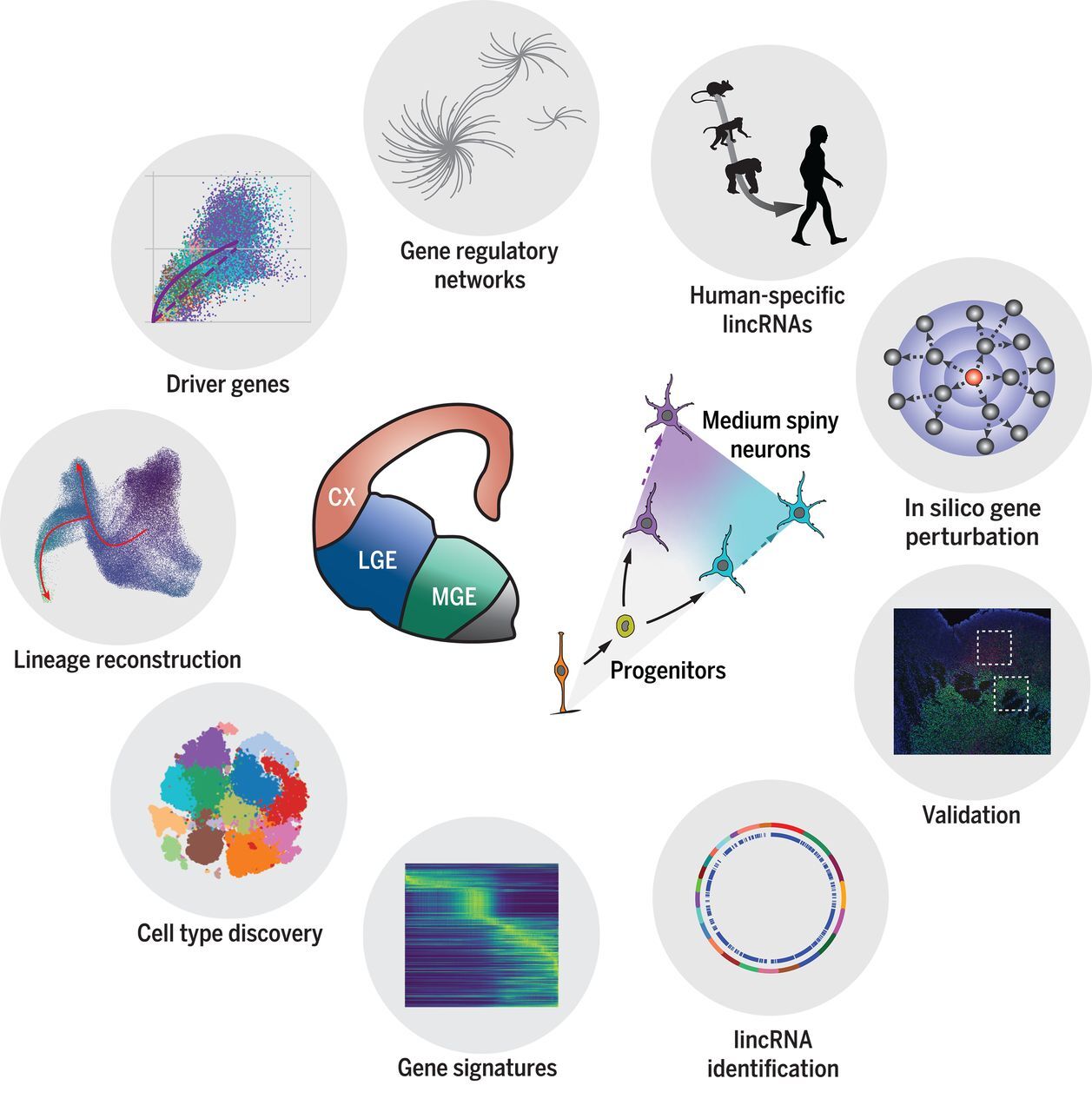
  • A catalog of RNA from single cells in the fetal striatum, a brain area implicated in autism, may unveil transcription hierarchies involved in early development. Science

    RNA from fetal striatum reveal hierarchies in early developent.
    RNA Catalog: Analyzing RNA species in fetal brain may reveal how their interactions drive striatal development.
  • Adults who have epilepsy caused by focal cortical dysplasia, an atypical pattern of neuronal layers, tend to have more autism traits than those without epilepsy. Epilepsy & Behavior
  • Treatment for sleep problems in autistic adults is rarely effective, according to a new survey. Autism
  • Another recent survey based on self-reports suggests that autistic adults also have poorer diets and get less exercise and sleep than non-autistic adults. Molecular Autism
  • In Japan, 2.75 percent of children born from 2009 to 2014 were diagnosed with autism by age 5, a higher incidence than has been reported elsewhere. Spectrum’s prevalence map tracks similar studies around the world. JAMA Network Open
  • An injection of oxytocin appears to reverse social deficits in a strain of mice with mutations in the autism-linked CHD8 gene; the mechanism of this effect remains unclear, however, because the hormone is too large to enter the brain. BMC Neuroscience
  • Autistic girls are diagnosed, on average, 14 months later than autistic boys, because they often present with few repetitive behaviors and satisfactory language skills. Journal of Autism and Developmental Disorders
  • An expert panel recommends focusing on traits rather than diagnoses when prescribing antipsychotics for children. Journal of the American Academy of Child & Adolescent Psychiatry
  • Long-read sequencing is a useful way to study large genomic alterations called structural variants, which typically exceed 50 base pairs in length. Nature Genetics

Science and society

  • Writers Steve Silberman, Eric Garcia and Sara Luterman discuss the shift in thinking about autism that led to this year’s renaming of April as Autism Acceptance Month. 1A
  • The psychedelic drugs MDMA and psilocybin appear poised to become mainstream treatments for post-traumatic stress disorder and depression, respectively, after clinical trials have shown their effectiveness. The New York Times
  • Research involving autistic people and virtual reality is on the agenda of a virtual conference slated for 12 to 14 May 2021. Applications of Virtual Reality in Autism Research
  • An article for young readers explains the ‘double empathy problem’ — how conversation styles differ between autistic and non-autistic people and can lead to communication breakdowns. Frontiers for Young Minds
  • North Carolina lawmakers have sent a bill to the governor that would allow behavior analysts to work with autistic children without the direct supervision of a psychologist. The Progressive Pulse

Sign up for the weekly Spectrum newsletter.

Stay current with the latest advancements in autism research.