Behavioral neuroscience
Recent articles
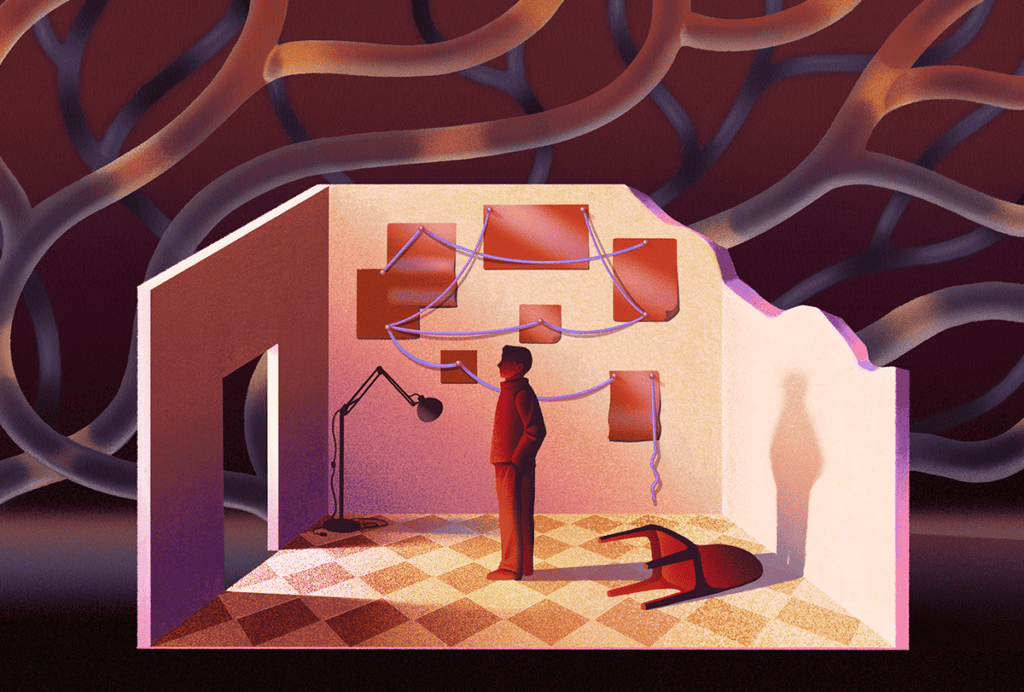
What to do when traditional mechanistic approaches no longer work
Many complex behaviors have stubbornly resisted mechanistic explanations. Deciphering them will require new approaches—and perhaps a new concept of “understanding.”
What to do when traditional mechanistic approaches no longer work
Many complex behaviors have stubbornly resisted mechanistic explanations. Deciphering them will require new approaches—and perhaps a new concept of “understanding.”
Neuromechanical models deepen our understanding of animal motor control
Thanks to recent progress in physics-based simulators and robotics, it has never been easier for neuroscientists to use neuromechanical modeling to test hypotheses about animal movement.
Neuromechanical models deepen our understanding of animal motor control
Thanks to recent progress in physics-based simulators and robotics, it has never been easier for neuroscientists to use neuromechanical modeling to test hypotheses about animal movement.
Revealing how crabs make their escape
Houdini-like Neohelice granulata offers a rare opportunity to record intracellularly from awake, behaving animals.
Revealing how crabs make their escape
Houdini-like Neohelice granulata offers a rare opportunity to record intracellularly from awake, behaving animals.
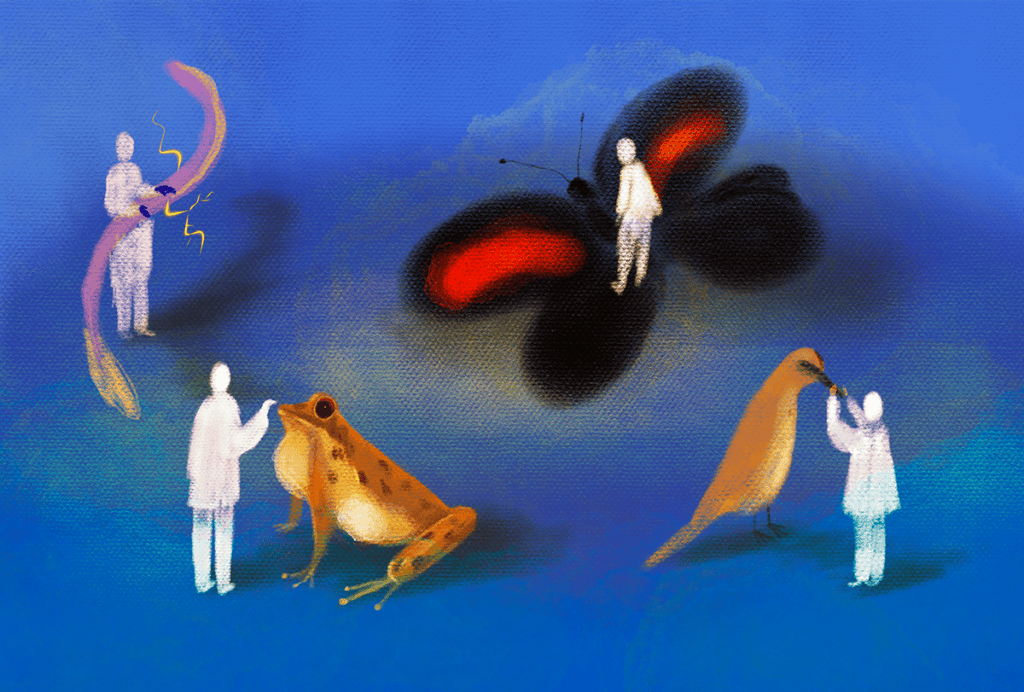
La biodiversidad de Latinoamérica impulsa avances en comportamiento social y cognición
Horneros, peces eléctricos, ranitas y otra fauna regional ayudan a los neurocientíficos a plantear nuevas preguntas de investigación en el campo.
La biodiversidad de Latinoamérica impulsa avances en comportamiento social y cognición
Horneros, peces eléctricos, ranitas y otra fauna regional ayudan a los neurocientíficos a plantear nuevas preguntas de investigación en el campo.
Descobrindo como as borboletas escolhem seus parceiros
As borboletas do gênero Heliconius permitem investigar os circuitos neurais e os genes envolvidos na preferência pela cor dos parceiros.
Descobrindo como as borboletas escolhem seus parceiros
As borboletas do gênero Heliconius permitem investigar os circuitos neurais e os genes envolvidos na preferência pela cor dos parceiros.
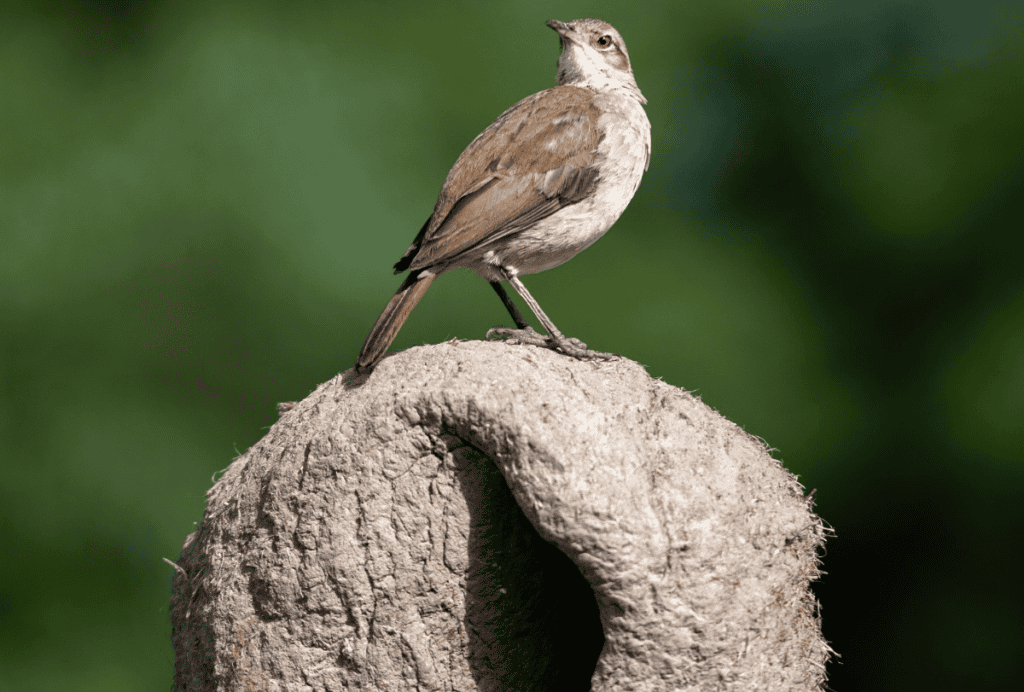
Identificando o que torna o canto de uma ave único
As oscinas e as suboscinas, duas linhagens de aves evolutivamente próximas, aprendem e não aprendem a cantar, respectivamente, ajudando os cientistas a desvendar os correlatos neuronais da aprendizagem e da variabilidade vocal.
Identificando o que torna o canto de uma ave único
As oscinas e as suboscinas, duas linhagens de aves evolutivamente próximas, aprendem e não aprendem a cantar, respectivamente, ajudando os cientistas a desvendar os correlatos neuronais da aprendizagem e da variabilidade vocal.
Revelando como os caranguejos conseguem escapar
Os Neohelice granulata, verdadeiros Houdinis, oferecem uma rara oportunidade de realizar registros intracelulares em animais acordados e em movimento.
Revelando como os caranguejos conseguem escapar
Os Neohelice granulata, verdadeiros Houdinis, oferecem uma rara oportunidade de realizar registros intracelulares em animais acordados e em movimento.
Qué hace único al canto de un ave
Los oscinos y los suboscinos son dos linajes de aves evolutivamente cercanos, pero solo uno de ellos aprende a cantar. Esa diferencia les permite a los científicos rastrear las bases neuronales del aprendizaje vocal.
Qué hace único al canto de un ave
Los oscinos y los suboscinos son dos linajes de aves evolutivamente cercanos, pero solo uno de ellos aprende a cantar. Esa diferencia les permite a los científicos rastrear las bases neuronales del aprendizaje vocal.
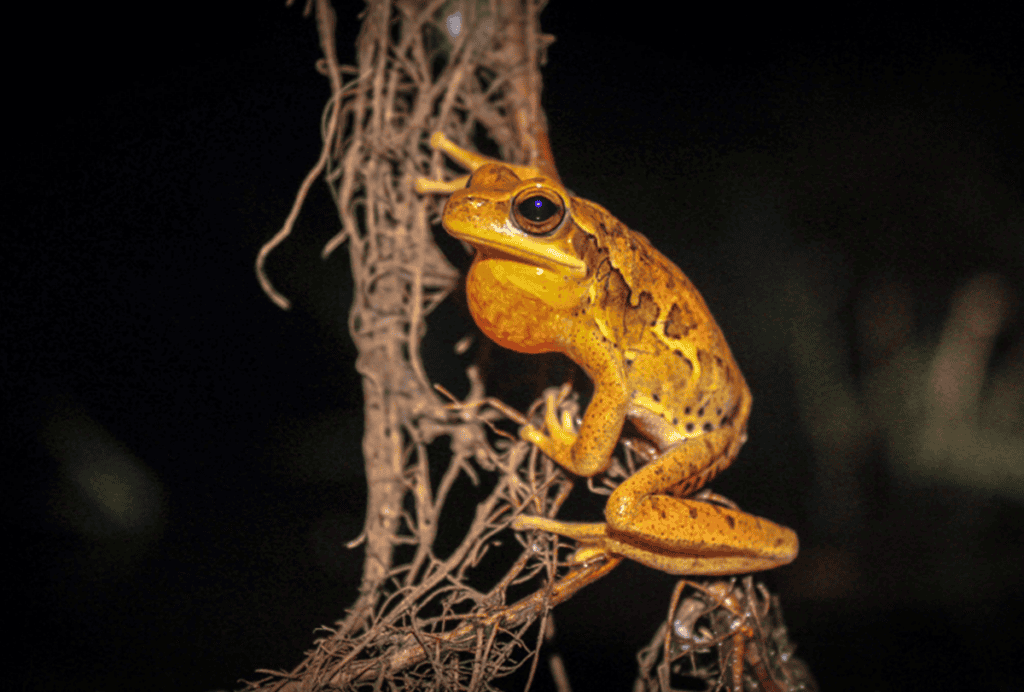
Cómo los neuropéptidos afectan el canto de la ranita de zarzal
Según una investigación uruguaya, los neuropéptidos modulan el “canto de amor” de la ranita de zarzal.
Cómo los neuropéptidos afectan el canto de la ranita de zarzal
Según una investigación uruguaya, los neuropéptidos modulan el “canto de amor” de la ranita de zarzal.
Descubriendo cómo las mariposas escogen su pareja
Mariposas Heliconius ofrecen una ventana a los circuitos neuronales y genes involucrados en la preferencia por el color de la pareja.
Descubriendo cómo las mariposas escogen su pareja
Mariposas Heliconius ofrecen una ventana a los circuitos neuronales y genes involucrados en la preferencia por el color de la pareja.
Explore more from The Transmitter
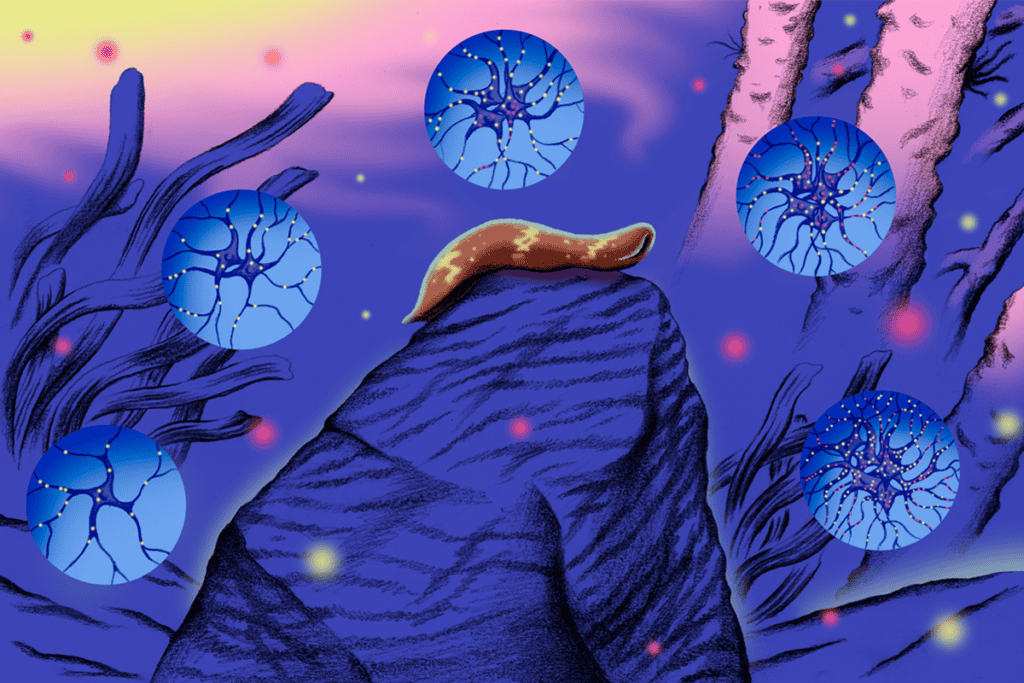
The three-banded panther worm is rewriting the story of brain evolution
The animal has a brain structure all its own, according to a 2026 preprint. The finding hints that brains could have evolved centralization before regionalization.
The three-banded panther worm is rewriting the story of brain evolution
The animal has a brain structure all its own, according to a 2026 preprint. The finding hints that brains could have evolved centralization before regionalization.
Does cognition happen in brain areas or between them?
Michael Cole explains how "brain flows" are the fundamental units of brain function and cognition.
Does cognition happen in brain areas or between them?
Michael Cole explains how "brain flows" are the fundamental units of brain function and cognition.
‘Brain Flows: How Network Dynamics Compose the Human Mind,’ an excerpt
In his new book, published today, Michael W. Cole examines how the movement of neuronal activity between neuronal populations shapes free will, intelligence and creativity. In this excerpt from Chapter 1, Cole explores why activity flows could unify efforts to map brain functions and connectivity.