In the “This paper changed my life” series, neuroscientists respond to a set of questions to reflect on a paper that profoundly influenced their career and how they think about their research.
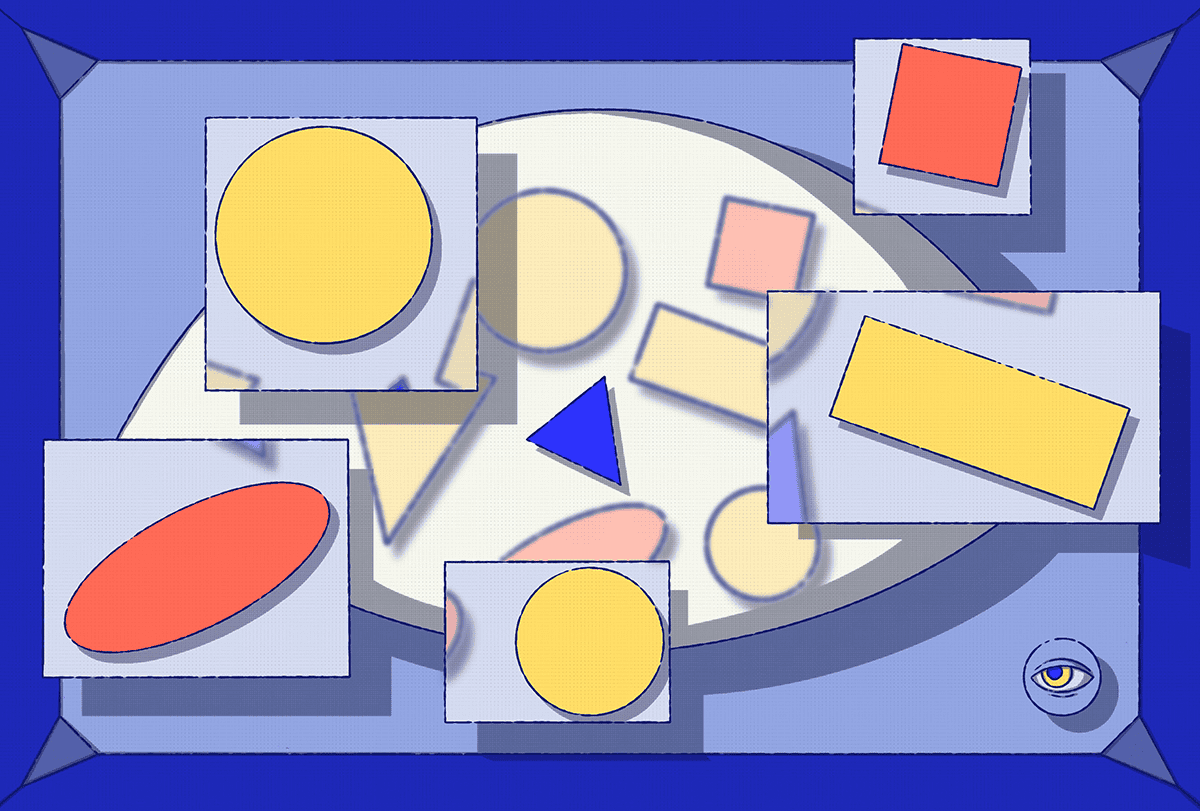
Fickle focus: This work found that that visual attentional modulation can occur independently of motor action.
Illustration by
Yihui Chang
Add us as a Preferred Source on Google
Set us as a Preferred Source to see The Transmitter more prominently in your Google Search results.
This paper changed my life: A first glimpse into the ‘middle’ of brain processing
Work by Jeffrey Moran and Robert Desimone showed that monkeys could focus their attention on different stimuli in their visual field without shifting their gaze. Their work marked a key milestone in the emergence of cognitive neuroscience.
By
Earl K. Miller
14 October 2026 | 3 min read
Answers have been edited for length and clarity.
What paper changed your life?
Selective attention gates visual processing in the extrastriate cortex. Moran J. and Desimone R. Science (1985)
Jeffrey Moran and Robert Desimone provided the first neural evidence for covert attention, the ability to focus on an area or object within a visual field, without eye movement.
The researchers recorded single neurons in the visual cortex of monkeys trained to pay attention to stimuli at one point in a neuron’s specific retinal field and ignore stimuli at another. After a number of trials, the monkeys were then cued to switch their attention to the other location. The results showed that attentional modulation can occur independently of motor action. The work offered an early view of the intermediate stages of cortical processing, mechanisms not reducible to either sensory input or motor output.
Earlier work had tied attentional shifts to impending actions, making it difficult to disentangle attention from motor preparation. This paper marked a key milestone in the emergence of cognitive neuroscience and provided a first glimpse into the “middle” of brain processing.
When did you first encounter this paper? What were you working on at the time?
I was a graduate student in Charlie Gross’ lab at Princeton University, working on high-level vision in the temporal cortex.
How did this research change how you think about neuroscience and influence your scientific trajectory?
It made me realize that we could study cognition, and that I wanted to study it. It also made me want to join Bob Desimone’s lab for my postdoctoral research, which I did. This paper literally changed my scientific (and life) trajectory.
Is there an underappreciated aspect of this paper you think other neuroscientists should know about?
Experimental design is everything. The strongest studies use fully balanced designs with independently varied factors. This paper used an elegant design to dissociate sensory from motor influences, pushing beyond the sensorimotor framework that dominated the field. As far as I know, it offered the first clear example of this shift.
What progress has been made since this paper was published?
Over the past 40 years, our view of the cortex has shifted dramatically. Earlier sensorimotor frameworks treated it as a set of pathways tracing spiking activity from input to output. We now understand cortical function in terms of neuron population dynamics and recurrent interactions, with a central role for feedback signals related to expectations and task goals. Moran and Desimone’s 1985 paper was a key step in this shift, showing that attention can modulate sensory representations via top-down influences rather than acting solely through feedforward pathways to drive behavior.
Explore more from The Transmitter

Acetaminophen effects on developing brain organoids; and more
By
Jill Adams
13 October 2026 | 1 min read

Private initiative makes ‘historic’ investment in autism research
By
Madeline Shaw
13 October 2026 | 4 min read
Cite this article: