LISTEN TO THIS STORY:
0:00
/
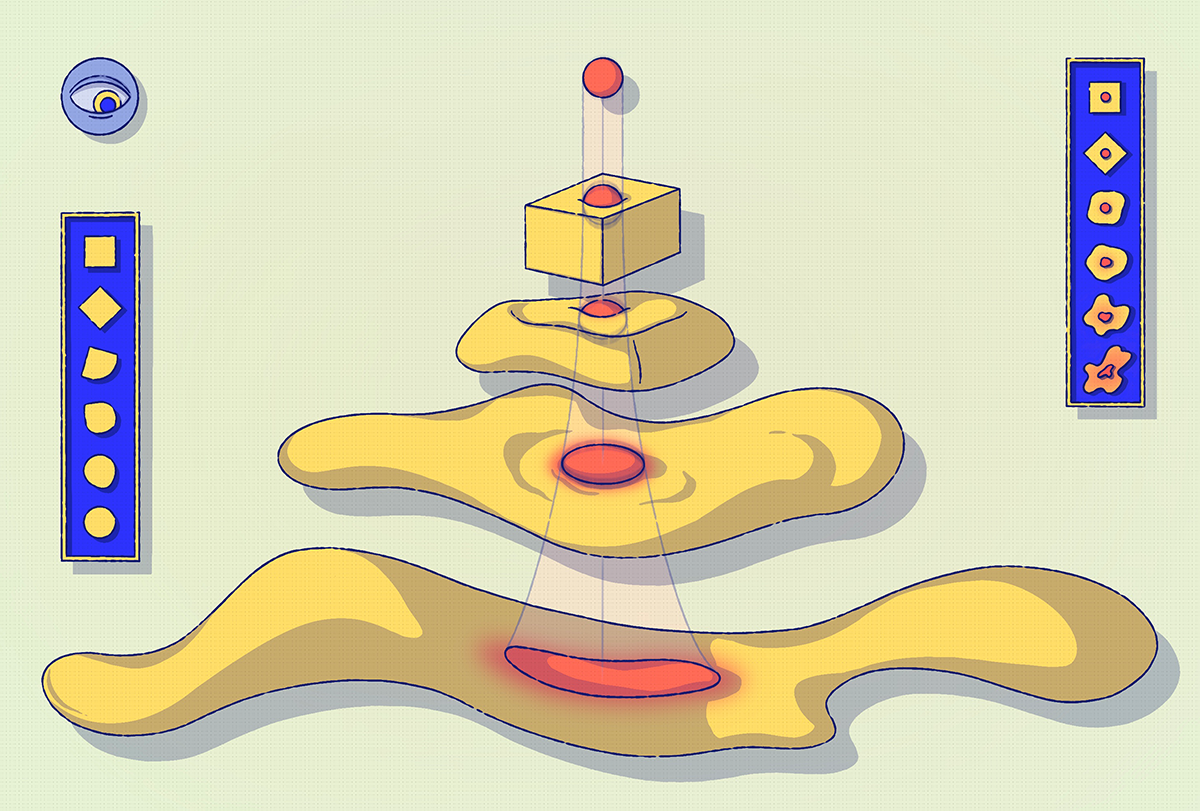
A 1987 Cell paper showed that a single transcription factor could turn fibroblasts into muscle cells. The work inspired Ardem Patapoutian to think about the molecular codes that define neuronal subtypes.
Answers have been edited for length and clarity.
What paper changed your life?
Expression of a single transfected cDNA converts fibroblasts to myoblasts. Davis R.L., Weintraub H., Lassar A.B. Cell (1987)
In this landmark paper, Robert Davis, Harold Weintraub and Andrew Lassar described the cloning and functional characterization of MyoD, a transcription factor whose expression alone was sufficient to convert fibroblasts into muscle cells.
The researchers used a subtractive hybridization strategy to isolate genes expressed in myoblasts and identified a single cDNA that, when transfected into a fibroblast cell line, caused those cells to activate muscle-specific gene programs and adopt a myoblast identity. The finding demonstrated that a single transcription factor could override an established cellular identity and impose a new one. Beyond its immediate impact in developmental biology, the paper introduced a conceptual framework that would eventually shape fields from stem cell biology to direct neuronal reprogramming: that cell identity can be specified, and respecified, by a surprisingly small number of molecular determinants.
This framework has real relevance to contemporary neuroscience. Questions persist about how neuronal subtypes are established and maintained, and whether the transcription factor logic that defines them can be harnessed for cell replacement or reprogramming approaches. The MyoD story provided an early and unusually clean demonstration that the answer to “Can identity be deliberately conferred?” is sometimes yes.
When did you first encounter this paper? What were you working on at the time?
I encountered this paper in 1990 as a first-year Ph.D. student at the California Institute of Technology, where I joined Barbara Wold’s lab. Barbara was one of the leading researchers studying the MyoD gene family in vivo—in developing and adult animals—rather than primarily in cell culture. This paper, published just three years earlier, was already foundational reading. My entire doctoral thesis was devoted to the MyoD family—how these factors function in physiological contexts, how they are regulated and what their roles are in muscle development and maintenance in living animals. Importantly, this paper shaped how I think about molecules and cells at a level I didn’t fully appreciate until much later.
Why is this paper meaningful to you?
The paper introduced the concept of the “master regulator gene,” a term I have always found somewhat uncomfortable. Not for pedantic reasons, but because I think the framing obscures what is actually most interesting about MyoD. “Master regulator” implies a fixed hierarchy: The master issues commands, and subordinates comply. But what actually excites me about MyoD is something more topological: the idea that biological networks have nodes of disproportionate consequence. MyoD is not powerful because it commands other genes from above. It is powerful because its position in the regulatory network is such that its presence or absence reshapes the entire downstream landscape. Adding it to a fibroblast doesn’t just flip a switch; it reorganizes what the cell is. I prefer to think of molecules such as MyoD not as masters but as nodes of outsized influence. That reframing has shaped how I approach problems and evaluate findings ever since.
How did this research change how you think about neuroscience and influence your scientific trajectory?
After my Ph.D., I moved into neuroscience, eventually focusing on how sensory neurons detect and signal environmental stimuli—temperature, pressure, touch. The field already knew these functions existed and that ion channels were the likely molecular transducers. The open question was which channels, and how central any given molecule might be to a neuron’s functional identity. My background with the MyoD family had left me with a particular habit of mind: a tendency to ask not just “What molecules are involved?” but “Which ones are load-bearing?”
When my lab worked on cold thermosensation, we found that the presence of TRPM8 channels was closely tied to a neuron’s identity as a cold sensor. The PIEZO2 channel my group discovered played a similarly central role in the neurons responsible for light touch and proprioception; animals lacking it lose those capacities in ways that are dramatic and difficult to compensate for. I don’t want to oversell the parallel: These channels were not discovered by analogy to MyoD, and the field knew sensors of this kind existed long before we identified them. But I think the years I spent thinking about the MyoD family made me more alert to the possibility that certain molecules define rather than merely contribute to a cell’s function, and made me particularly interested in finding and characterizing them.
Is there an underappreciated aspect of this paper you think other neuroscientists should know about?
I think neuroscientists who didn’t train in developmental biology may not fully appreciate how conceptually radical this paper was at the time. Before MyoD, cell identity was understood as the accumulated product of a long developmental history—layers of epigenetic and transcriptional programming that could not be easily redirected. This paper showed, strikingly, that this layered history could in some sense be bypassed: that a single factor, introduced acutely, could impose a new identity on a cell with a completely different past.
What new progress has been made since this paper was published?
The most dramatic extension of the MyoD finding was the discovery that pluripotent stem cells could be generated from adult somatic cells by introducing four transcription factors, the Yamanaka factors—work honored with the Nobel Prize in Physiology or Medicine in 2012. More targeted combinations have since been used to convert fibroblasts directly into neurons, cardiomyocytes and other specialized cell types without passing through a pluripotent state. In neuroscience, researchers have identified transcription factor codes that specify particular neuronal subtypes, and there is active work on using these factors for cell replacement therapies in disease.
But the deepest legacy of the MyoD paper, for me, is the conceptual one: the permission to believe that complex biological identities can sometimes be encoded more simply than they appear.