Memory
Recent articles
Is it time for neuroscience to shift its focus from a computational mind to a navigating mind?
Andrea Hiott explains her navigational approach to the mind, and why now is the time to embrace seemingly paradoxical findings in neuroscience.
Is it time for neuroscience to shift its focus from a computational mind to a navigating mind?
Andrea Hiott explains her navigational approach to the mind, and why now is the time to embrace seemingly paradoxical findings in neuroscience.
Finding neuroheterogeneity’s sweet spot
Once thought to be detrimental to memory processing, neuronal diversity—at the right ‘Goldilocks’ dose—is a new boon to theoretical neuroscience.
Finding neuroheterogeneity’s sweet spot
Once thought to be detrimental to memory processing, neuronal diversity—at the right ‘Goldilocks’ dose—is a new boon to theoretical neuroscience.

How Nobel Prize-winning optogenetics has revolutionized neuroscience
The technique has enabled neuroscientists to target brain circuits and cells with unprecedented specificity, transforming the study of memory, interoception, brain disorders and reward, among other domains.
How Nobel Prize-winning optogenetics has revolutionized neuroscience
The technique has enabled neuroscientists to target brain circuits and cells with unprecedented specificity, transforming the study of memory, interoception, brain disorders and reward, among other domains.

Infant memories: Lost but not gone?
Infantile amnesia is not simply a story about forgetting the past. It is an opportunity to understand how memory itself is built.
Infant memories: Lost but not gone?
Infantile amnesia is not simply a story about forgetting the past. It is an opportunity to understand how memory itself is built.
Fruit flies use memory to track odors
When flies encounter a tasty smell, they stroll in and out of the odor plume—a process that depends on encoding a memory of the angle needed to travel back to the plume, according to a new study.
Fruit flies use memory to track odors
When flies encounter a tasty smell, they stroll in and out of the odor plume—a process that depends on encoding a memory of the angle needed to travel back to the plume, according to a new study.
When we sleep, our brain is filled with spontaneous neural activity. What is it doing?
Daniel Levenstein explains how internally generated brain activity during sleep shapes our cognition, and why NeuroAI is such a powerful approach to understanding the brain.
When we sleep, our brain is filled with spontaneous neural activity. What is it doing?
Daniel Levenstein explains how internally generated brain activity during sleep shapes our cognition, and why NeuroAI is such a powerful approach to understanding the brain.
This paper changed my life: A technical breakthrough for memory studies
In a 2007 Science paper, Mark Mayford and his colleagues found that some neurons activated during learning are also recruited during memory retrieval. Noelia Weisstaub shares how this study and others drove an era of great progress in tool development.
This paper changed my life: A technical breakthrough for memory studies
In a 2007 Science paper, Mark Mayford and his colleagues found that some neurons activated during learning are also recruited during memory retrieval. Noelia Weisstaub shares how this study and others drove an era of great progress in tool development.
Este artículo cambió mi vida: Un descubrimiento técnico para estudios de la memoria
En un artículo de Science del 2007, Mark Mayford y sus compañeros encontraron neuronas activadas durante el aprendizaje son reclutadas durante la recuperación de la memoria. Noela Weisstaub comparte como este estudio y otros impulsaron una era de gran progreso en el desarrollo de herramientas
Este artículo cambió mi vida: Un descubrimiento técnico para estudios de la memoria
En un artículo de Science del 2007, Mark Mayford y sus compañeros encontraron neuronas activadas durante el aprendizaje son reclutadas durante la recuperación de la memoria. Noela Weisstaub comparte como este estudio y otros impulsaron una era de gran progreso en el desarrollo de herramientas
Este artigo mudou minha vida: um avanço técnico para os estudos da memória
Em um artigo publicado na revista Science em 2007, Mark Mayford e seus colegas descobriram que alguns neurônios ativados durante a aprendizagem também são reativados durante a recuperação da memória. Noelia Weisstaub conta como esse e outros estudos impulsionaram uma era de grande progresso no desenvolvimento de ferramentas.
Este artigo mudou minha vida: um avanço técnico para os estudos da memória
Em um artigo publicado na revista Science em 2007, Mark Mayford e seus colegas descobriram que alguns neurônios ativados durante a aprendizagem também são reativados durante a recuperação da memória. Noelia Weisstaub conta como esse e outros estudos impulsionaram uma era de grande progresso no desenvolvimento de ferramentas.
New findings begin to resolve theta sweep debate
Theta sweeps have been mired in controversy for decades, but the field is starting to converge on a consensus view of their function.
New findings begin to resolve theta sweep debate
Theta sweeps have been mired in controversy for decades, but the field is starting to converge on a consensus view of their function.
Explore more from The Transmitter
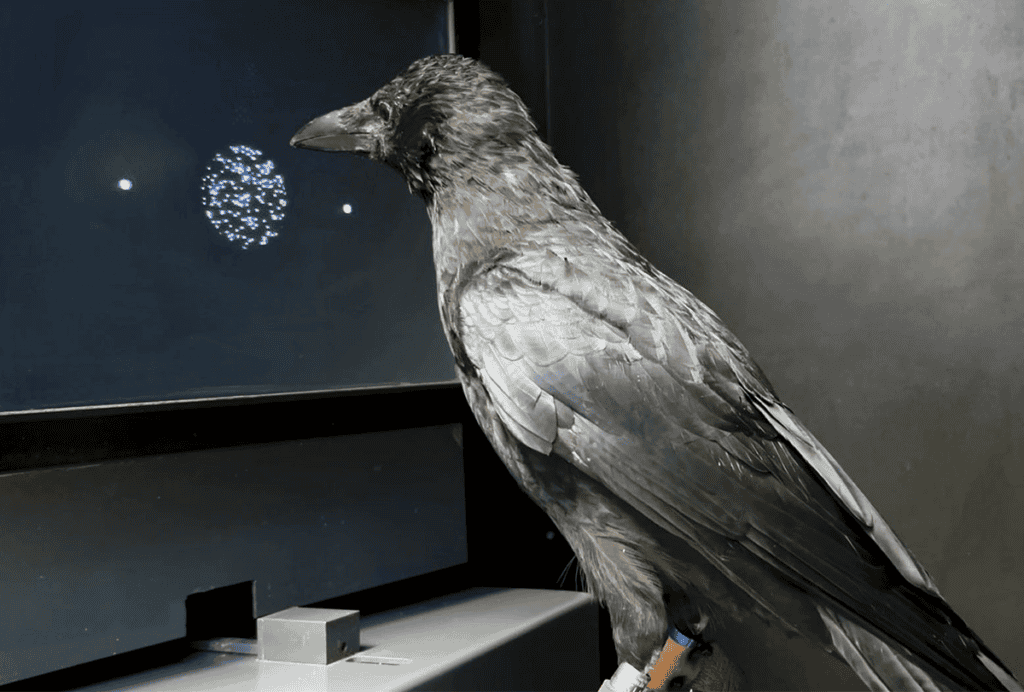
Crows have brains ‘in the fast lane’
The birds accurately complete decision-making tasks twice as fast as primates, although their endbrains look considerably different.
Crows have brains ‘in the fast lane’
The birds accurately complete decision-making tasks twice as fast as primates, although their endbrains look considerably different.
Prevalence of profound autism declines with new definition
The updated, more precise definition used in a CDC study includes adaptive scores.
Prevalence of profound autism declines with new definition
The updated, more precise definition used in a CDC study includes adaptive scores.
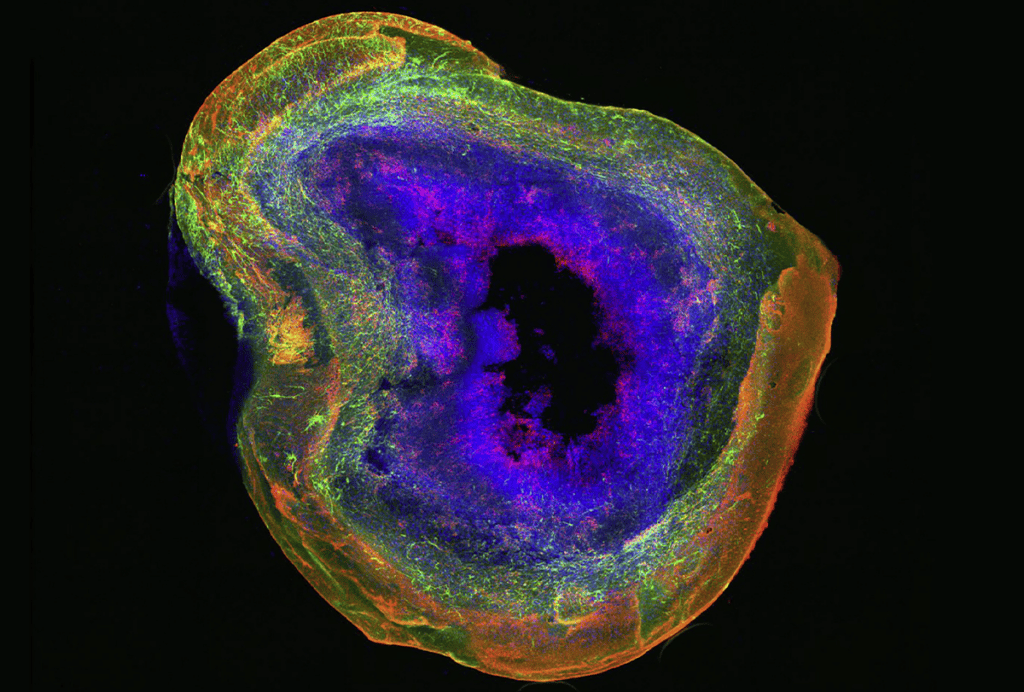
Human brain organoids come of age—but still have room to grow
The U.S. government has touted organoids as an alternative to animals for studying the brain. The model has improved since its debut in 2013, but scientists are still working to overcome key limitations: immaturity, consistency and the lack of vascularization.
Human brain organoids come of age—but still have room to grow
The U.S. government has touted organoids as an alternative to animals for studying the brain. The model has improved since its debut in 2013, but scientists are still working to overcome key limitations: immaturity, consistency and the lack of vascularization.