LISTEN TO THIS STORY:
0:00
/
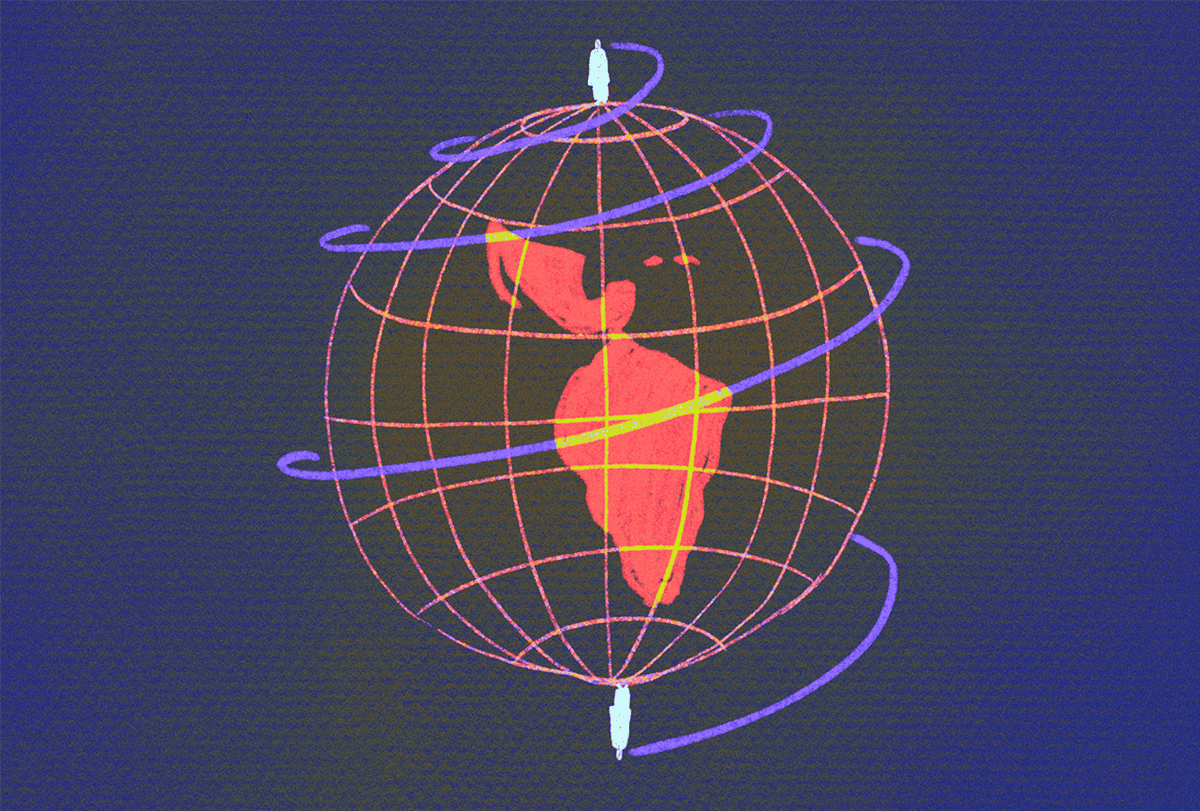
As the Federation of Latin American and Caribbean Neuroscience Societies Congress kicks off next week, its president shares how the organization aims to foster collaborations and provide high-quality training for young neuroscientists in the region.
Leia este artigo em português.
As is true for a lot of scientists, my career has taken me all over the world. I earned my Ph.D. in Italy, moved to France for two postdoctoral fellowships and later had a stint in Brazil as a visiting professor. I finally settled in Uruguay at the Universidad de la República in 2008.
Practicing neuroscience in all these countries helped me develop a passion for fostering international scientific cooperation. Alongside my academic career, I’ve helped build collaborative research networks at organizations such as the AMSUD Pasteur Network, la Sociedad de Neurociencias del Uruguay and the Federation of Latin American and Caribbean Neuroscience Societies (FALAN), where I currently serve as president of the executive committee. The federation brings together neuroscience societies from Argentina, Brazil, Chile, Colombia, Costa Rica, Cuba, Mexico, Peru and Uruguay to help advance neuroscience in the region.
Next week we kick off the fourth FALAN Congress in Santiago, Chile. This important event is made possible by the dedicated efforts of all FALAN member societies and especially the hosting society, the Sociedad Chilena de Neurociencia, under the leadership of its director María Pertusa. We’re expecting more than 1,000 attendees, with a large portion of them having received financial support to facilitate their participation.
The meeting plays a fundamental role in achieving our main goal of strengthening regional collaboration. Guided by the motto “Unity Is Strength,” the federation seeks to address our shared challenges across Latin America—including limited research funding, inadequate infrastructure and insufficient opportunities for capacity building—by fostering scientific collaboration, education, training, public engagement and the development of neuroscience, particularly in emerging countries. For example, this year we’ve launched an intensive postgraduate course in Chile that combines theoretical instruction with hands-on laboratory training, open to students from all over the region.
At FALAN, many researchers discover that there are colleagues working on remarkably similar research questions in neighboring countries, not just in Europe or North America. Such relationships enable neuroscientists to share expertise, equipment, training opportunities and funding resources; they create a stronger collective voice for investment in science and help develop research networks that reflect the region’s unique populations and health priorities. To foster this kind of collaboration, we organized two special events during FALAN—one with a theme of “International Networking” and another focused on “Connecting Minds, Connecting Regions: Neuroscience Networks across Latin America.”
This year’s scientific program includes plenary lectures by Mu-ming Poo, emeritus professor at the University of California, Berkeley, and Shubha Tole, president of the International Brain Research Organization (IBRO), as well as an outstanding representation of neuroscientists from across Latin America and the Caribbean, including Francisco Aboitiz of the Pontifica Universidad Católica de Chile, Grace Schenatto of the Universidade Federal de Minas Gerais and several notable early-career researchers. We’ll also host events dedicated to diversity, equity and inclusion. We’ve organized discussion panels on women’s leadership in neuroscience in Latin America and on neurorights and neuroethics, and a special event on career, equity and collective capacity hosted by the ALBA Network.
F
In my first term on the FALAN executive committee in 2022, we focused on expanding our social media presence, strengthening relationships among member societies, engaging with potential new members and formalizing collaborative networks in the region. During the following term, our efforts focused primarily on organizing the federation’s Congress, which takes place every four years. So far, we’ve held congresses in Cancun, Mexico; Buenos Aires, Argentina; and Belem, Brazil (and one virtual meeting, during COVID), each attracting 800 to 1,200 attendees.
In addition to connecting researchers across the region, FALAN also has a strong focus on expanding local training programs. Latin America has a long tradition of producing highly talented young neuroscientists, as demonstrated by the many successful careers of researchers trained in the region. Unfortunately, several excellent educational initiatives—including the renowned Escuela Latinoamericana de Neurociencias and the Miledi Neuroscience Training Program for Latin America—have struggled to achieve long-term continuity because of financial and organizational constraints.
Recognizing this need, we decided to take on the responsibility of building a sustainable regional training program. At the end of 2024, we organized the Kick-off Meeting for the Strategic Plan of the FALAN Neuroscience School, bringing together scientific societies, research institutions, funding agencies and other stakeholders interested in contributing to this vision. This year, in close collaboration with IBRO’s Latin American Regional Committee (IBRO-LARC), we’ve launched an ambitious initiative, the Latin American Training Program in Neuroscience, a first-of-its-kind postgraduate course that provides participants with comprehensive exposure to modern neuroscience methodologies, including electrophysiology, computational neuroscience, intravital microscopy and neurotranscriptomics. We were able to support the participation of 27 students from across the region!
This initiative has been made possible through the essential support of IBRO and the International Society for Neurochemistry (ISN), together with the remarkable commitment of the Chilean neuroscience community—led by Patricio Rojas, professor at the Universidad de Santiago de Chile—whose members generously opened up their laboratories and dedicated their time and expertise to the program. Our goal is to establish a long-lasting program under FALAN’s umbrella that will continue providing high-quality neuroscience training for young scientists throughout Latin America and the Caribbean.
We are committed to playing a pivotal role in regional development by connecting researchers, sharing opportunities and creating new collaborative initiatives. We’ve built relationships with organizations such as the Latin American Brain Initiative (LatBrain), a collective effort to strengthen brain research across the region. We’ve also participated in activities of the Brain Research International Data Governance & Exchange (BRIDGE) project, which seeks to develop responsible and sustainable frameworks for international sharing of brain data and ultimately to establish a global consortium for brain and mental health data governance. Together with the growing network of regional scientific collaborations, we are creating new pathways toward academic excellence while making more efficient use of available resources.
At FALAN, we believe deeply in the potential of Latin American neuroscience and in what we can achieve when we come together as a region. We envision a future in which researchers, clinicians, trainees and scientific societies are more closely connected, sharing knowledge, expertise and opportunities that help break down borders. By strengthening regional networks and investing in the next generation, we can address shared challenges, reduce disparities and ensure that Latin American neuroscience continues to make meaningful contributions to the global scientific community.