LISTEN TO THIS STORY:
0:00
/
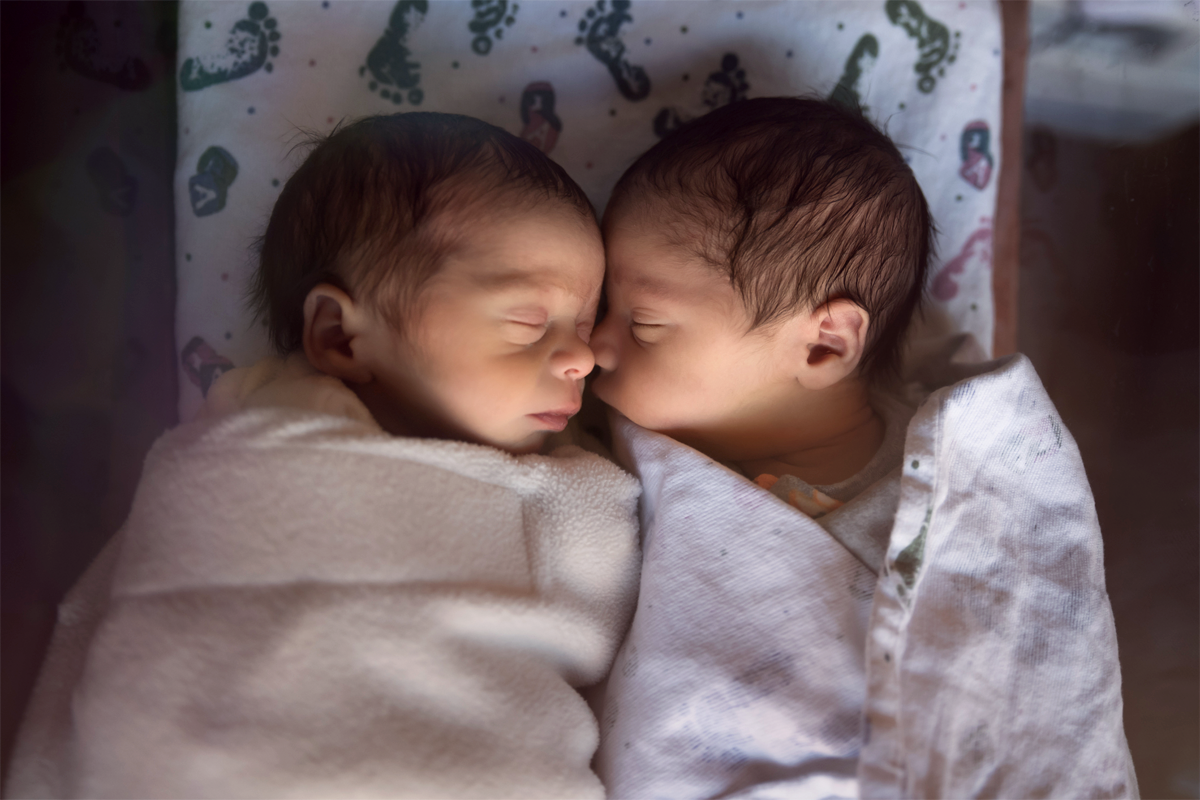
The approach helps reveal whether maternal genes contribute directly to autism in children or have indirect effects on the prenatal environment.
An examination of the cousins of autistic children in Denmark, described in a new preprint, sheds light on the direct and indirect effects that maternal genetics may have on autism likelihood.
Even without genetic data, “using family designs, we can still probe questions about the role of genetics in certain epidemiological associations,” says study investigator Magdalena Janecka, associate professor of child and adolescent psychiatry and population health at NYU Langone Health.
Several maternal illnesses during pregnancy track with autism in children, though these connections may not be causally related. For example, although maternal epilepsy and maternal hypertension are linked with autism in children, there is an almost equally strong association between paternal epilepsy and paternal hypertension and autism, Janecka and her colleagues reported in a 2025 study. This suggests that genes or some other contribution from either parent or both parents, and not maternal illness specifically, might explain these connections.
What the 2025 study could not do was show whether maternal genetics play a role in child autism either directly or indirectly, says Brian Lee, professor of epidemiology at Drexel University, who did not contribute to the work. Maternal genes can have direct effects if they are inherited by a child or indirect effects if they instead alter prenatal environments—for instance, by changing womb folate levels.
In the new study, which was posted in April on medRxiv, Janecka and her colleagues examined the health records of all 18,374 children born in Denmark between 1998 and 2015 who were diagnosed with autism by the end of 2016, along with the records of their mothers and maternal aunts, uncles and cousins. The team investigated potential associations between these autistic children and a set of 236 diagnoses their mothers may have received up to four years before the children were born, which included obstetric, cardiometabolic and psychiatric conditions. The scientists also analyzed whether the autistic children’s parallel cousins (their maternal aunt’s children) and cross cousins (their maternal uncle’s children) were diagnosed with autism.
S
ome conditions, such as postpartum hemorrhage, personality disorders and epilepsy, were associated with autism in all cousins. This suggests that for these children, autism was the direct result of genetic factors shared by the children’s parents.But other conditions—such as false labor, recurrent major depressive disorder, other anxiety disorders and systemic connective tissue involvement—showed stronger associations with autism in parallel cousins than in cross cousins. This result hints at indirect genetic effects, according to the investigators: Parallel cousins have mothers who are sisters, so the mothers’ shared genetics means they could provide similar prenatal environments, whereas cross cousins have mothers who are not related.
“The impressive part is that this registry-based family design can be used to separate how these pathways of direct and indirect genetic effects contribute to observed links between maternal health and offspring autism without directly using genetic data,” says Michael Eriksen Benros, professor of health and medical sciences at the University of Copenhagen, who did not contribute to the preprint.
The strategy “can and should be applied to other large populations with in-depth information from medical records,” says Lisa Croen, director of the Autism Research Program at Kaiser Permanente’s Northern California Division of Research, who did not take part in the new work. Future research “should incorporate data on both maternal genetic and nongenetic—for example, maternal condition—risk factors,” she adds.
In addition, “the obvious next step would be to add genetic data to these data,” Lee says. “There are few cohorts in the world with the genetics to go along with this register data, but of course this team is based in Denmark, which includes the well-characterized iPSYCH cohort. I imagine we’ll see a few more papers coming from this group down the road.”