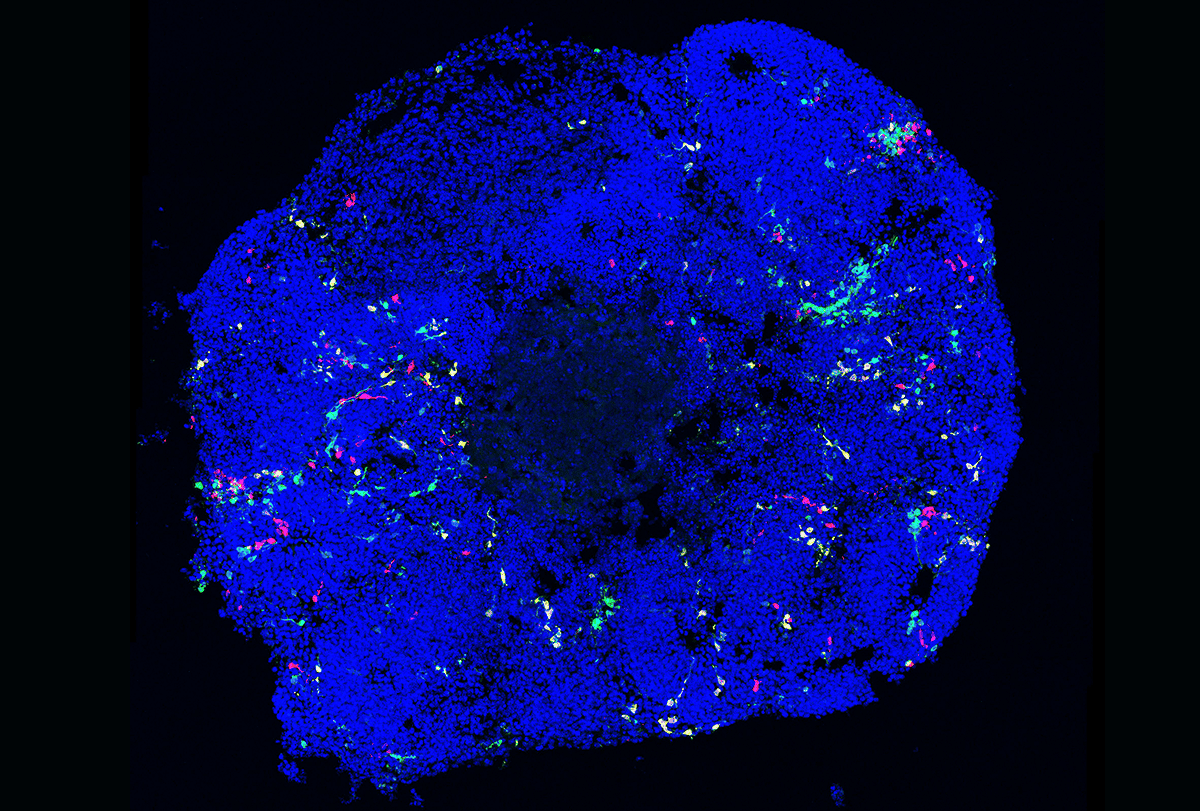
Neural stem cells in mouse cortical organoids generate many of the same cell types as those in the developing brain, but individual stem-cell lineages do not follow the orderly developmental progression seen in vivo, according to a new study.
So even though the organoids’ self-organization can reproduce much of cortical development, it may not accurately mimic when individual neural stem cells divide or the neurons they produce, the findings suggest.
“The good news is that we show that a large part of the developmental processes—the fundamental processes—are remarkably similar,” says study investigator Simon Hippenmeyer, professor at the Institute of Science and Technology Austria. The work, he says, is reassuring for researchers using organoids but also reveals some of the model’s limitations.
The findings could also have implications beyond mouse organoids, says Flora Vaccarino, professor of neuroscience at Yale University, who was not involved in the study. Many developmental processes are shared between mouse and human, and the study could encourage researchers to track radial glia development in human brain organoids to determine which features are conserved and which differ, she says.
R
adial glial progenitors—the neural stem cells that generate excitatory neurons in the cortex—typically progress through a predictable sequence: Early in mouse development, they divide to expand the stem-cell population. Then they start producing neurons, followed by glial cells.Hippenmeyer and his team tracked individual radial glial progenitors over time in mouse cortical organoids—recording how they divided and what types of cells they produced—and then compared those lineages with ones they had previously mapped in the developing mouse cortex.
Overall, the organoids developed like the mouse cortex, producing similar types and proportions of cells with similar gene activity patterns at comparable stages. But some of the organoids’ radial glial cells started making neurons earlier than their counterparts in vivo, while others were still expanding the stem-cell population.
Still, the broad sequence of radial glial cell development is preserved, with neurons being produced before glia, Hippenmeyer says. The organoid stem cells, he adds, “can read the hour, but they miss the precision at the minute scale.”
These cells also tended to produce a narrower range of neurons, the team found. In the developing brain, individual radial glial cells typically give rise to both CTIP2-positive neurons, which project outside the cortex, and SATB2-positive neurons, which connect the two brain hemispheres. In organoids, about one-third of lineages produced only one type or the other, compared with about 3 percent of lineages in vivo. The researchers detailed their findings last month in Nature.
T
he study didn’t identify the cause of the mismatch between organoids that look broadly normal and individual lineages that behave differently. Missing features of the stem-cell environment—including blood vessels, microglia and interneurons—could contribute, and Hippenmeyer says several factors may work together.Still, the mismatch is important to recognize, says Aparna Bhaduri, associate professor of biological chemistry at the University of California, Los Angeles, who was not involved in the work. For studies that focus on specific cell lineages, researchers may need to check organoid results against other methods or real brain tissue, she says. “It’s always important to know and benchmark the systems that you’re using.”
Because mouse and human stem cells develop in similar ways, it is likely the same phenomenon occurs in human brain organoids, says In-Hyun Park, associate professor of genetics and neuroscience at Yale University, who was not involved in the study.
The human fetal cortex also contains a wider variety of radial glial cells, which could lead to even greater differences from development in vivo, but testing that directly is difficult because researchers can’t perform the same kind of lineage tracing in the developing human cortex, Park says.
The new findings suggest researchers should be careful not to assume that human organoids reproduce every aspect of brain development, says Anthony Wynshaw-Boris, professor of genetics and genome sciences at Case Western Reserve University, who was not involved with the research. But, he adds, organoids still offer a valuable way to study neurodevelopmental conditions that are difficult or impossible to investigate directly in people.