Optogenetics
Recent articles

How Nobel Prize-winning optogenetics has revolutionized neuroscience
The technique has enabled neuroscientists to target brain circuits and cells with unprecedented specificity, transforming the study of memory, interoception, brain disorders and reward, among other domains.
How Nobel Prize-winning optogenetics has revolutionized neuroscience
The technique has enabled neuroscientists to target brain circuits and cells with unprecedented specificity, transforming the study of memory, interoception, brain disorders and reward, among other domains.

In memoriam: Susumu Tonegawa, ‘intellectual giant’
He won the Nobel Prize for his work on immunology and then went on to define the field of learning and memory.
In memoriam: Susumu Tonegawa, ‘intellectual giant’
He won the Nobel Prize for his work on immunology and then went on to define the field of learning and memory.
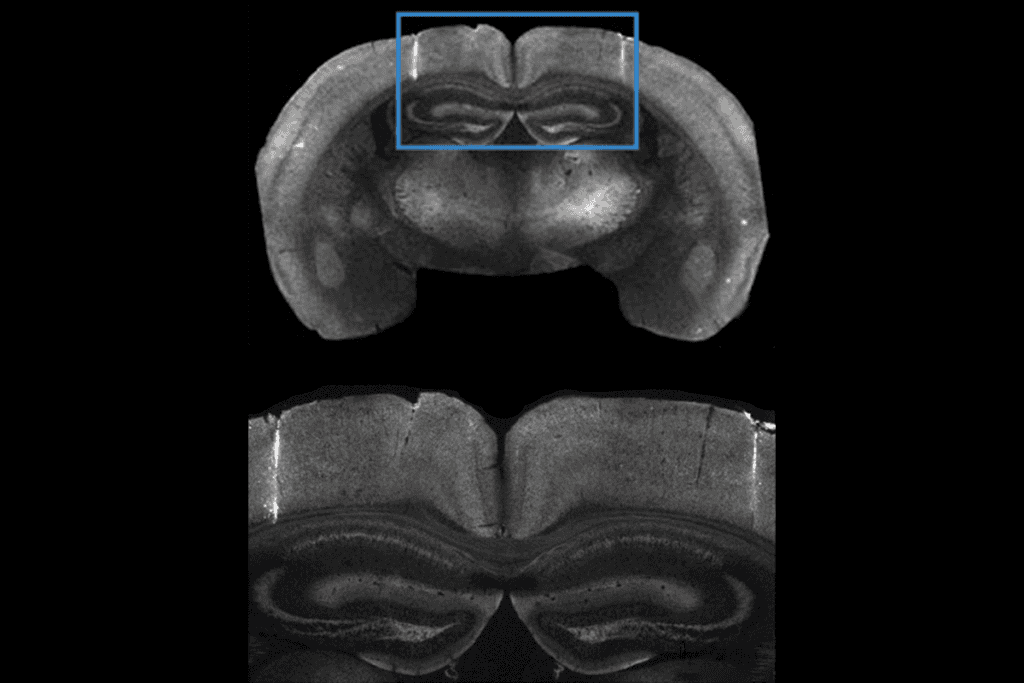
Making waves: Sleep-like brain activity in awake mice lowers sleep need, boosts memory
Alternating on/off firing patterns don’t just characterize deep, slow-wave sleep, they drive some of its restorative benefits, new findings suggest.
Making waves: Sleep-like brain activity in awake mice lowers sleep need, boosts memory
Alternating on/off firing patterns don’t just characterize deep, slow-wave sleep, they drive some of its restorative benefits, new findings suggest.

What are the most transformative neuroscience tools and technologies developed in the past five years?
Artificial intelligence and deep-learning methods featured prominently in the survey responses, followed by genetic tools to control circuits, advanced neuroimaging, transcriptomics and various approaches to record brain activity and behavior.
What are the most transformative neuroscience tools and technologies developed in the past five years?
Artificial intelligence and deep-learning methods featured prominently in the survey responses, followed by genetic tools to control circuits, advanced neuroimaging, transcriptomics and various approaches to record brain activity and behavior.

‘How to Change a Memory: One Neuroscientist’s Quest to Alter the Past,’ an excerpt
Part scientific exploration, part memoir, Steve Ramirez’s new book delves into the study of memory manipulation and his personal journey of discovery, friendship and grief.
‘How to Change a Memory: One Neuroscientist’s Quest to Alter the Past,’ an excerpt
Part scientific exploration, part memoir, Steve Ramirez’s new book delves into the study of memory manipulation and his personal journey of discovery, friendship and grief.
Whole-brain, bottom-up neuroscience: The time for it is now
Applying new tools to entire brains, starting with C. elegans, offers the opportunity to uncover how molecules work together to generate neural physiology and how neurons work together to generate behavior.
Whole-brain, bottom-up neuroscience: The time for it is now
Applying new tools to entire brains, starting with C. elegans, offers the opportunity to uncover how molecules work together to generate neural physiology and how neurons work together to generate behavior.
Facial movements telegraph cognition in mice
If you give a mouse a decision, its thought process may show on its face.
Facial movements telegraph cognition in mice
If you give a mouse a decision, its thought process may show on its face.
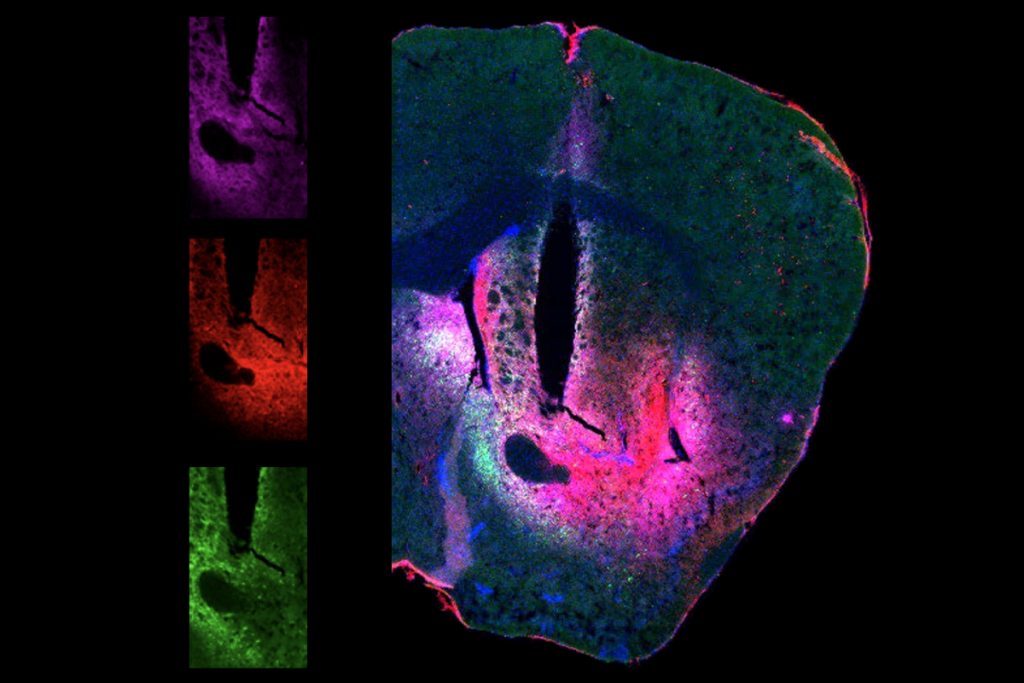
New dopamine sensor powers three-color imaging in live animals
The tool leverages a previously unused segment of the color spectrum to track the neurotransmitter and can be used with two additional sensors to monitor other neurochemicals at different wavelengths.
New dopamine sensor powers three-color imaging in live animals
The tool leverages a previously unused segment of the color spectrum to track the neurotransmitter and can be used with two additional sensors to monitor other neurochemicals at different wavelengths.
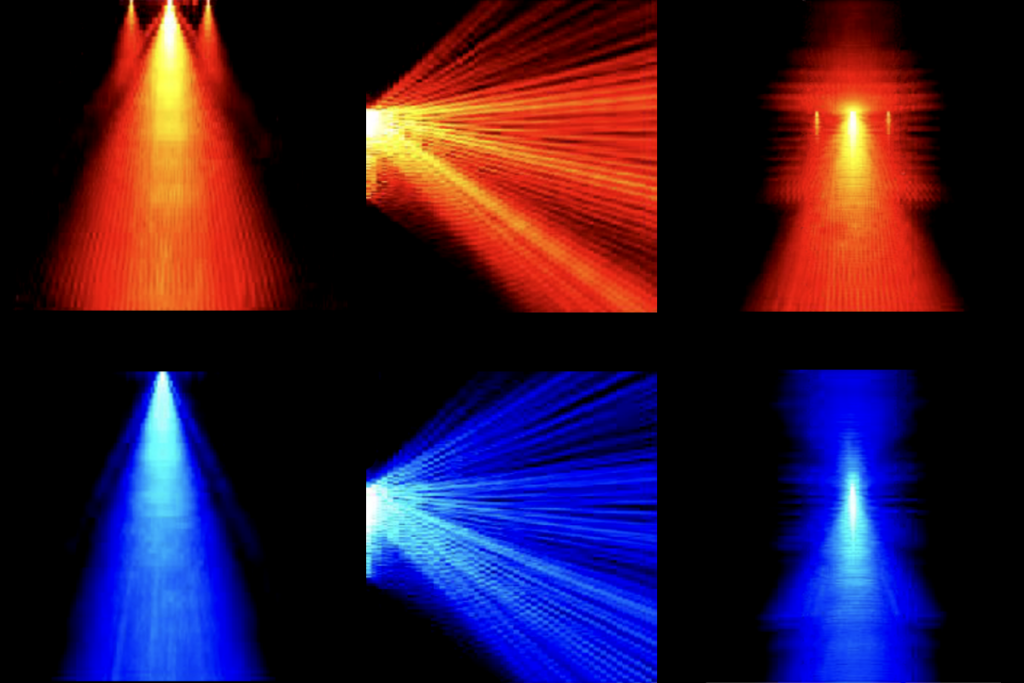
‘Perturb and record’ optogenetics probe aims precision spotlight at brain structures
The tool provides a new way to characterize cells and study neuronal circuits.
‘Perturb and record’ optogenetics probe aims precision spotlight at brain structures
The tool provides a new way to characterize cells and study neuronal circuits.
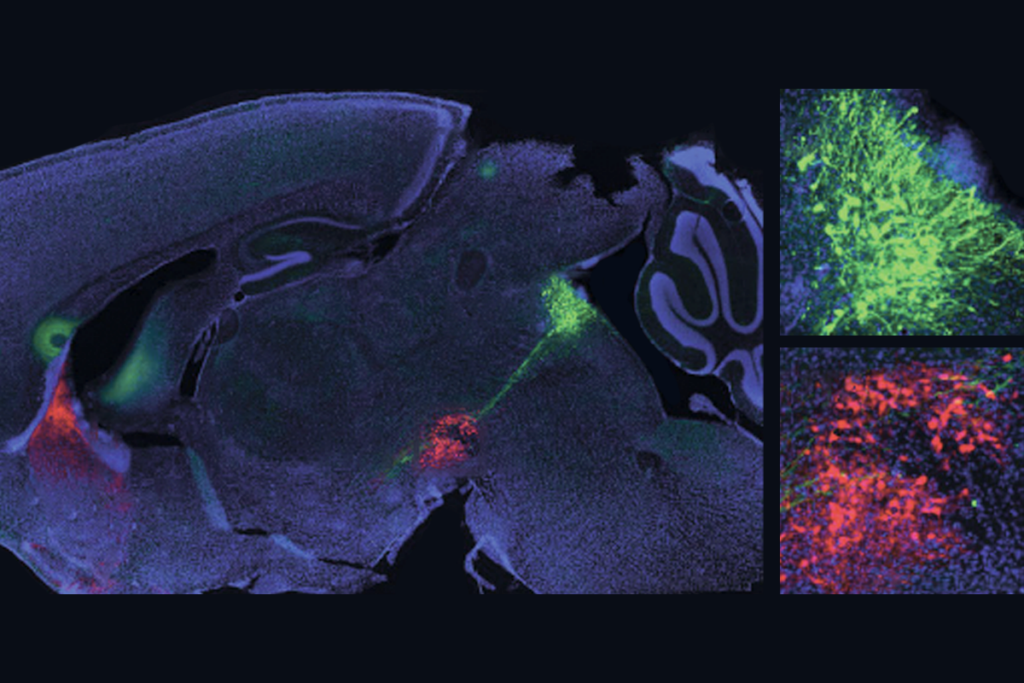
Dopamine ‘gas pedal’ and serotonin ‘brake’ team up to accelerate learning
Mice learn fastest and most reliably when they experience an increase in dopamine paired with an inhibition of serotonin in their nucleus accumbens, a new study shows, helping to resolve long-standing questions about the neuromodulators’ relationship.
Dopamine ‘gas pedal’ and serotonin ‘brake’ team up to accelerate learning
Mice learn fastest and most reliably when they experience an increase in dopamine paired with an inhibition of serotonin in their nucleus accumbens, a new study shows, helping to resolve long-standing questions about the neuromodulators’ relationship.
Explore more from The Transmitter
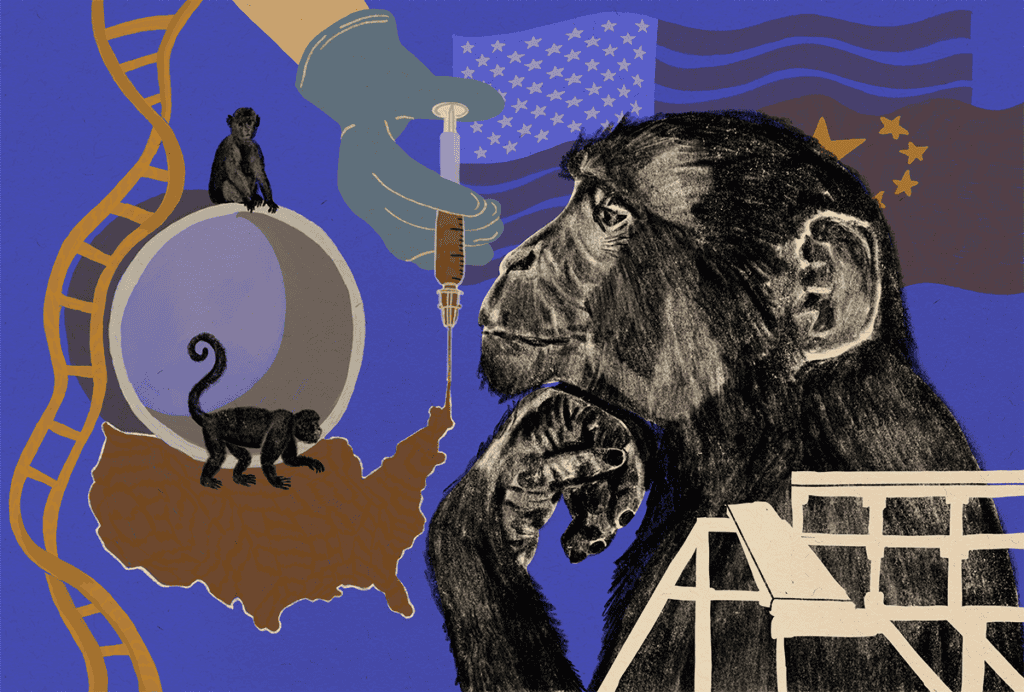
U.S. national primate research centers face an uncertain future
The facilities were meant to last 100 years. Four decades shy of that mark, amid flatlined funds and mounting political pressure, their directors are trying to find a path forward.
U.S. national primate research centers face an uncertain future
The facilities were meant to last 100 years. Four decades shy of that mark, amid flatlined funds and mounting political pressure, their directors are trying to find a path forward.
What if nonhuman primate research goes away?
As the U.S. government takes steps to stop using nonhuman primates in research, The Transmitter investigates what that shift could mean for neuroscience.
What if nonhuman primate research goes away?
As the U.S. government takes steps to stop using nonhuman primates in research, The Transmitter investigates what that shift could mean for neuroscience.
The neuroscience questions that need nonhuman primates
The Transmitter asked 17 neuroscientists what questions might remain unanswered if support for nonhuman primate research continues to decline.
The neuroscience questions that need nonhuman primates
The Transmitter asked 17 neuroscientists what questions might remain unanswered if support for nonhuman primate research continues to decline.