Fact sheet: Autism prevalence
Recent articles
Explore changes in the diagnosis over time, global differences, the role of genes and the environment, and more.
FEATURED
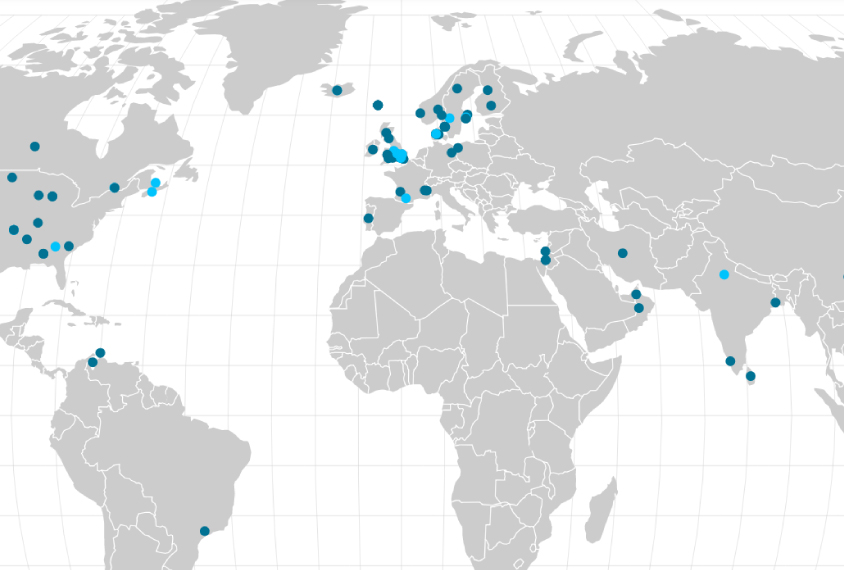

Autism by the numbers: Explaining its apparent rise
Prevalence research

Autism prevalence increasing in children, adults, according to electronic medical records

U.S. study charts changing prevalence of profound and non-profound autism

Inconsistent prevalence estimates highlight studies’ flaws

The evolution of ‘autism’ as a diagnosis, explained

U.S. autism prevalence continues to rise as race and sex gaps shrink, new stats show

Autism prevalence in the United States, explained

Racial, economic disparities skew New Jersey data on autism, intellectual disability
Environmental factors

Environmental factors unlikely to account for rise in autism prevalence

Acetaminophen use during pregnancy does not increase child’s chance of having autism, study finds

Journal club: Does lithium in drinking water contribute to autism?

Whooping cough vaccine during pregnancy carries no risk of autism

No link between epidurals and autism, two studies confirm

Prenatal exposure to antipsychotic medication does not increase odds of autism, ADHD

The link between parental age and autism, explained

Majority of autism risk resides in genes, multinational study suggests
How pregnancy may shape a child’s autism

The link between antidepressants and autism, explained
Autism is more heritable in boys than in girls
Vaccines
Smoke, mirrors and Robert Kennedy Jr.’s vaccine safety panel
Vaccination: Costly clash between autonomy, public health


Additional stories

U.S. autism prevalence inches upward as racial gaps close
Autism prevalence in the United States rose to 1 in 44 children in 2018, up from 1 in 54 in 2016.
U.S. autism prevalence inches upward as racial gaps close
Autism prevalence in the United States rose to 1 in 44 children in 2018, up from 1 in 54 in 2016.

New U.S. data show similar autism prevalence among racial groups
Autism prevalence in the United States continues to rise, according to a new study of 8-year-old children in 11 states. Boys are 4.3 times as likely as girls are to have autism, a ratio that is consistent with previous estimates.
New U.S. data show similar autism prevalence among racial groups
Autism prevalence in the United States continues to rise, according to a new study of 8-year-old children in 11 states. Boys are 4.3 times as likely as girls are to have autism, a ratio that is consistent with previous estimates.

Prevalence estimates for autism indicate bias against non-white groups
Estimates for autism's prevalence in three U.S. states reveal significant inequalities in how children of different races and ethnicities are counted and assessed.
Prevalence estimates for autism indicate bias against non-white groups
Estimates for autism's prevalence in three U.S. states reveal significant inequalities in how children of different races and ethnicities are counted and assessed.

New autism diagnoses shifting toward mild end of spectrum
Although the number of people diagnosed with autism is on the rise, the proportion with severe features has dropped since 2000.
New autism diagnoses shifting toward mild end of spectrum
Although the number of people diagnosed with autism is on the rise, the proportion with severe features has dropped since 2000.
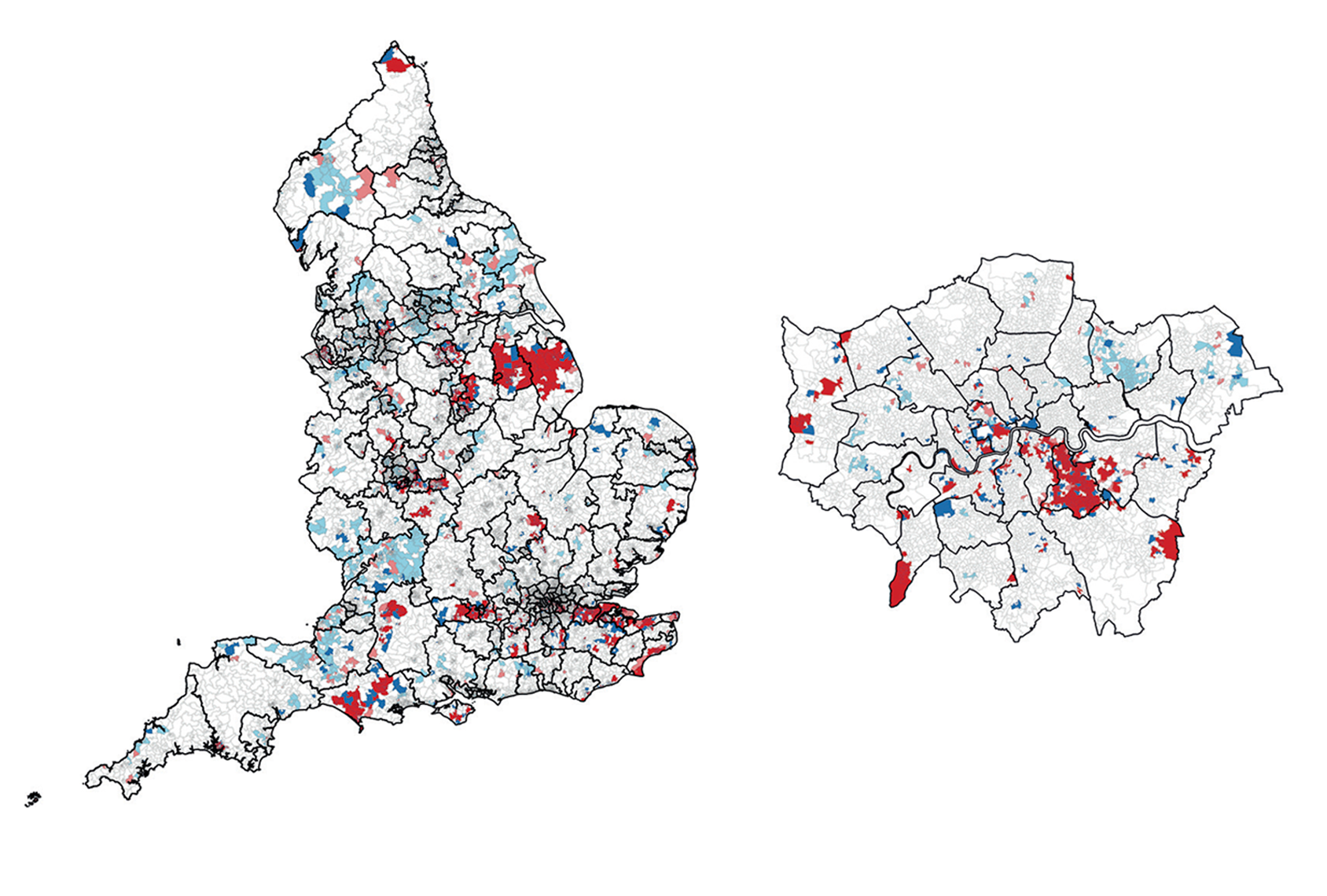
Autism incidence in England varies by ethnicity, class, location
High rates of autism are linked to lower socioeconomic status and minority ethnic groups, according to the largest-ever autism incidence study.
Autism incidence in England varies by ethnicity, class, location
High rates of autism are linked to lower socioeconomic status and minority ethnic groups, according to the largest-ever autism incidence study.
Rise in autism prevalence but not traits; and more
Here is a roundup of autism-related news and research spotted around the web for the week of 7 July.
Rise in autism prevalence but not traits; and more
Here is a roundup of autism-related news and research spotted around the web for the week of 7 July.

CDC autism prevalence numbers warrant attention—but not in the way RFK Jr. proposes
The head of the U.S. Department of Health and Human Services is ignoring decades of research findings.
CDC autism prevalence numbers warrant attention—but not in the way RFK Jr. proposes
The head of the U.S. Department of Health and Human Services is ignoring decades of research findings.

High prevalence of developmental delay strains Australia’s support systems
The nation needs to build capacity to support the roughly 20 percent of children in Australia who have developmental delay.
High prevalence of developmental delay strains Australia’s support systems
The nation needs to build capacity to support the roughly 20 percent of children in Australia who have developmental delay.

Controversial ‘cost of autism’ paper retracted
The journal’s decision comes two years after Spectrum covered backlash from researchers over the study.
Controversial ‘cost of autism’ paper retracted
The journal’s decision comes two years after Spectrum covered backlash from researchers over the study.
Turner syndrome tied to autism
Most people with the X-linked syndrome have autism traits, and about one-quarter meet diagnostic criteria for the condition.
Turner syndrome tied to autism
Most people with the X-linked syndrome have autism traits, and about one-quarter meet diagnostic criteria for the condition.
Explore more from The Transmitter

How to teach programming in the age of AI
Scientists and educators are concerned about students using artificial intelligence to shortcut their learning. But there are also opportunities, especially when it comes to teaching neuroscience students how to code.
How to teach programming in the age of AI
Scientists and educators are concerned about students using artificial intelligence to shortcut their learning. But there are also opportunities, especially when it comes to teaching neuroscience students how to code.

Neuroscience conference policy draws confusion, apology
NeurIPS organizers apologized and altered course after issuing a policy that barred submissions from researchers at U.S.-government-sanctioned institutions.
Neuroscience conference policy draws confusion, apology
NeurIPS organizers apologized and altered course after issuing a policy that barred submissions from researchers at U.S.-government-sanctioned institutions.

Funding for animal research alternatives reaches ‘inflection point’
The United States and Europe are dedicating hundreds of millions of dollars in funding to advance novel alternative methods, but not all neuroscientists see this as a positive step.
Funding for animal research alternatives reaches ‘inflection point’
The United States and Europe are dedicating hundreds of millions of dollars in funding to advance novel alternative methods, but not all neuroscientists see this as a positive step.